Discover how lipid-coated beadlets improve nutraceutical formulations by protecting sensitive ingredients, enhancing handling, masking taste, and controlling release.
Written By
Aishwarya
Published on
29 August 2026
Tags
Lipid coating is a technique in which a nutraceutical's active ingredient is encapsulated in a lipid coating layer to protect it and alter its behavior in the final product. Depending on the material used, this lipid layer can act as a barrier to moisture, oxygen, light, and other environmental factors.
Including certain nutraceutical components in an end product may not always be easy. Some ingredients may have physical or chemical properties that make formulation difficult.
Poor water compatibility or dispersion
Specific components, especially lipophilic ones, may not dissolve well in water-based solutions. This creates problems when preparing powders, drinkables, and other products.
Sensitivity to environmental conditions
Moisture, oxygen, light, or heat exposure can affect the stability of some nutraceutical ingredients during processing and storage. Therefore, you may need to protect these ingredients to maintain quality.
Oxidation and stability challenges
However, certain active agents are highly vulnerable to oxidation and decomposition when exposed to air. As a result, stability becomes a key concern in product development.
Strong taste or odor
Some plant extracts, amino acids, oils, and other nutraceutical ingredients may be unpalatable and produce odors that could affect the consumer experience. An appropriate coating technique could mitigate this problem.
Challenges in handling and processing
Fine powders, sticky materials, oily ingredients, or poorly flowing ingredients can be difficult to weigh, blend, transport, or incorporate uniformly into a formulation.
Compatibility with other ingredients
For complex formulations, the physical interaction of specific actives with other ingredients may cause stability or processing issues. An additional coating layer can serve to shield certain ingredients from the environment.
Need for modified release.
Some formulations need the drug to be released slowly as opposed to instantaneously. In these cases, you need to consider the coating material carefully.
This is the reason why the physical nature of the ingredient may be as critical as the ingredient itself. Tools like lipid coating processes can convert appropriate raw materials into viable ingredients.
Lipid coating can alter a nutraceutical's physical and functional properties, making it easier to formulate and more protective. This depends on the active component, the lipids used, the coating level, and the application.
Creates a protective barrier
The lipid coating forms a layer around the active ingredient, acting as a physical barrier between the ingredient and the external environment.
Reduces environmental exposure
By forming a lipid coat, it limits the ingredient's interaction with moisture, air, light, and other external factors, which may help stabilize sensitive ingredients.
Improves handling and flowability
Some difficult-to-handle ingredients can be transformed into lipid-coated particles, improving their physicochemical properties.
Helps manage taste and odor
For components with strong sensory attributes, the lipid barrier may minimize contact between the active and the taste buds, improving the user’s experience.
Influences dispersion and releases
The lipid barrier may also influence how the component interacts with other fluids. Depending on the lipid system used, the lipid barrier may affect the rate of dispersion, dissolution, and release of the active.
Supports formulation capability
The coating process can physically isolate the active from selected formulation components.
In summary, lipid coating transforms an unwieldy raw material into one that is well protected, easier to handle, and formulation-ready, while giving the formulator better control of the raw material within the final nutraceutical product.
Selection of suitable lipid material
The type of lipid depends on the finished product's composition and required performance. Consider compatibility, stability, melting point, and the required release characteristics.
Active loading
Optimizing the level of active incorporation within the coated particle is important to achieve the necessary potency without compromising other particle properties.
Coating level and thickness
The quantity and extent of the lipid layer can affect the protective effect, stability, dispersion, and delivery of the active. Formulation goals can control these properties.
Particle-size control
Particle size influences flowability, mixing, coating efficiency, dissolution, and dispersion in the final product. Uniformity in particle size is therefore vital for predictable behavior.
Melting and solidification characteristics
The lipid's melting and solidification characteristics directly affect the coating process and performance. The lipid system should preserve the necessary physical properties under certain conditions.
Coating uniformity
A consistent coating helps ensure individual particles receive comparable protection and behave more predictably. Uneven coating can lead to variations in stability or release.
Processing and storage conditions
Factors such as temperature, humidity, mechanical stress, and other processing conditions may influence the structural integrity of the lipid coating. Storage conditions also matter for preserving its characteristics.
Consider lipid coating for nutraceutical ingredients that face challenges with stability, protection, sensory attributes, handling, or release. This depends on the specific characteristics of the ingredients and the final products.
Lipophilic ingredients
For ingredients that are not very soluble in water, using lipids in the formulation can help disperse them in appropriate formulations. Lipid coating can also provide a compatible medium for selected oil- or fat-soluble ingredients.
Oxidation-sensitive ingredients
For oxidation-sensitive ingredients, lipid coating can protect them from oxygen and other environmental factors.
Moisture-sensitive ingredients
The lipid coating can act as a barrier, preventing moisture from contacting the ingredients and improving physical stability.
Ingredients requiring additional protection
For certain delicate vitamins, phytochemicals, carotenoids, and other functional ingredients, additional protection against external factors might be required. A lipid coating can serve as an extra layer of protection for the active ingredient.
Ingredients with strong taste or odor
Some nutraceutical ingredients exhibit significant bitterness, odor, or other sensory characteristics. With a lipid coating, the ingredient does not come into direct contact with the consumer during use.
Ingredients where modified release may be beneficial
A lipid coating can influence how the active ingredient reacts with its surroundings and can help when modified release is a formulation goal.
In general, lipid coating becomes especially important when the raw material's inherent physicochemical characteristics make formulation difficult. With a suitable lipid system and proper coating process, you can achieve more stable and manageable nutraceutical formulations.
Lipid-coated nutraceutical components can be formulated into various end products based on component properties and end-product performance requirements. In addition to providing protection, the coating can affect handling, sensory properties, stability, dispersion, and release.
Capsules and tablets
Lipid-coated substances can be included in capsule and tablet formulations to facilitate handling of selected ingredients that are either sensitive or lipophilic. The coating can protect the selected substance during manufacturing and also affect its release from the product once ingested.
Powder blends and sachets
In powder supplement formulations, lipid-coated substances can improve flowability and handling while reducing interactions between coated ingredients and other supplement components.
Gummies
Lipid-coated ingredients could be studied in gummy candies, where taste, odor, stability, and processing are critical factors. The lipid coating could minimize direct sensory exposure and provide added protection.
Functional foods
Lipid-coated components can help address concerns about stability, taste, compatibility, and manufacturing in functional foods, including nutrition bars and other fortified foods.
Sports nutrition products
Lipid-coated ingredients can be included in sports nutrition powders, performance blends, recovery formulas, and other specialty forms. They can improve ingredient functionality and stability while making the release profile an important part of formula development.
Specialized nutrition formulation
The lipid coating process adds flexibility in formulating these special nutrition-based foods, helping manage ingredient sensitivity, ingredient interactions, sensorial attributes, and release.
Formulation of lipid-coated systems considers the specific challenges of each active ingredient and the requirements of the final nutraceutical product. Rather than using the same coating strategy for each active ingredient, the formulation process can be customized to achieve the desired results.
Customized microencapsulated lipid-coated beadlets
Ingredients can also be designed as beadlets with distinct particle and coating features that help address formulation and manufacturing challenges.
Ingredient-specific encapsulation
Active agents have different characteristics, such as solubility, sensitivity, taste, and stability. This means the encapsulation method will be chosen and optimized individually for each one.
Particle-size engineering
Particle sizes may be controlled to ensure proper mixing, flow, coating, dosing, and finished-product performance.
Active-loading optimization
Active loading can be regulated to achieve the desired potency without losing desirable physical characteristics for processing and formulation.
Lipid and coating selection
Lipid system selection can be based on several parameters, including active compatibility, melting, stability, protection, and release properties.
Stability and release optimization
Coating parameters can be optimized to protect fragile ingredients and deliver the desired dissolution or release characteristics.
Application-specific formulation
This process takes into account the ultimate use of the ingredient, whether it is used in capsules, tablets, powders, gums, sachets, functional foods, or sports nutrition, to ensure that the coated ingredient is appropriate for the production process.
Development for different nutraceutical dosage formats
Umang Nutraceuticals can create particles with properties suited to various delivery methods, giving companies the flexibility to turn an idea into a product.
Umang Nutraceuticals can create particles with properties suited to various delivery modes, giving companies the flexibility to turn an idea into a product.
Lipid coating can provide more than protection for the nutraceutical active component. Depending on the component and the coating method used, the functional layer formed by lipid coating could affect the product's stability, handling, dispersion, release, and sensory properties. Thus, lipid coating can effectively address formulation challenges for difficult-to-handle components.
Lipid-coated beads tailored to the task may help formulation scientists turn difficult raw materials into easier-to-handle formulations. By carefully considering the lipids used, drug loading, particle size, coating process, and other parameters, we can adapt the system to the final product's needs.
Encapsulation and particle engineering expertise at Umang Nutraceuticals enables us to formulate tailored solutions for your nutraceutical ingredients to meet your formulation requirements. We concentrate on developing solutions that suit the modern requirements of nutraceutical formulations.
Umang Nutraceuticals provides a way for brands to create unique nutraceutical products in different forms like capsules, tablets, powders, gummies, functional foods, sports nutrition, and many more through ingredient-based development, customized beadlet technology, and formulation based on application.
Aishwarya
29 August 2026
Discover how encapsulated creatine can improve stability, taste, compatibility, and processing while enabling gummies, RTD beverages, capsules, bars, and other formats.
Read More →
Aishwarya
29 August 2026
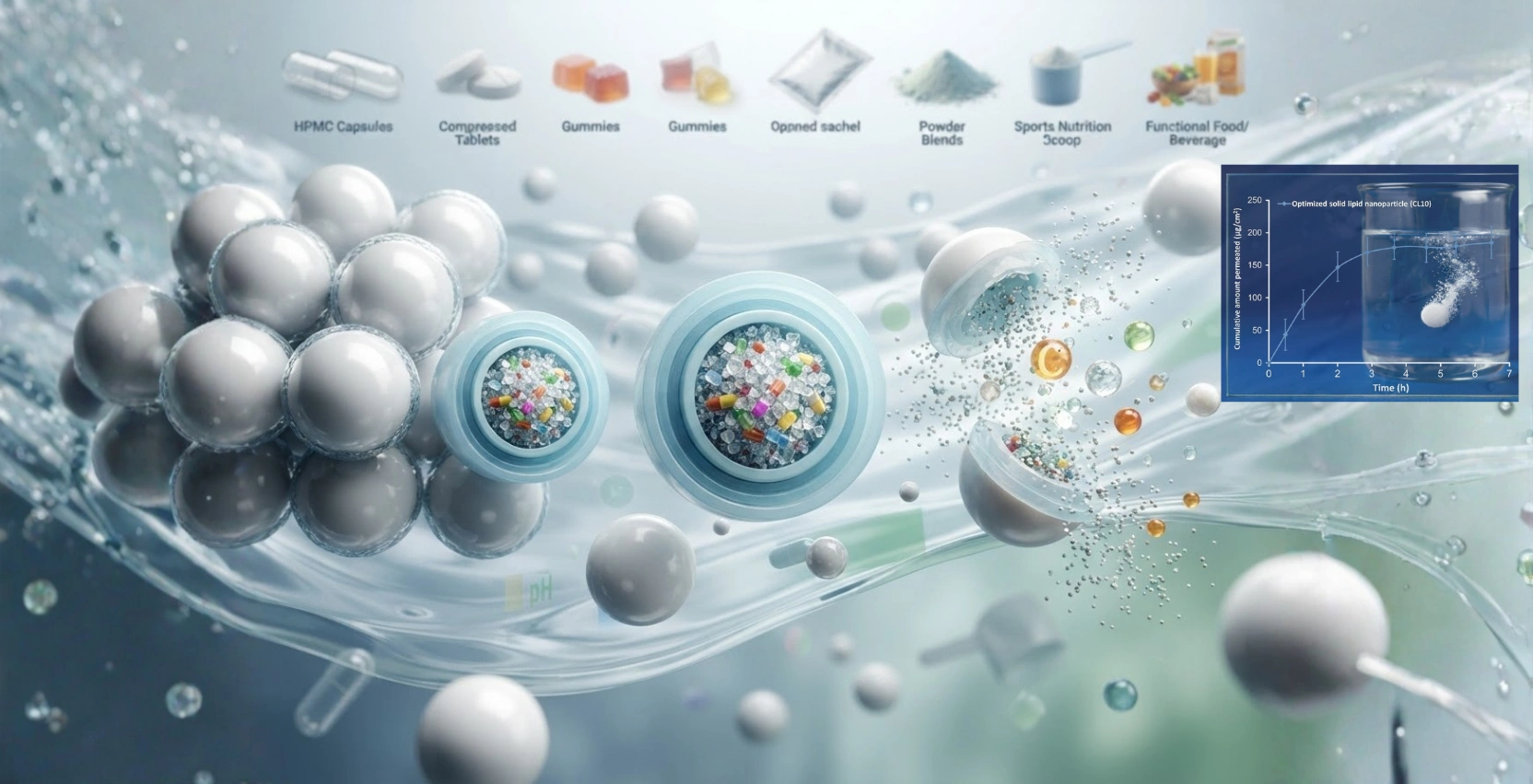
Discover how lipid-coated beadlets improve nutraceutical formulations by protecting sensitive ingredients, enhancing handling, masking taste, and controlling release.
Read More →
Aishwarya
03 September 2026
Discover how encapsulation transforms challenging nutraceutical ingredients into stable, formulation-ready ingredients for innovative supplement products.
Read More →
Aishwarya
21 August 2026
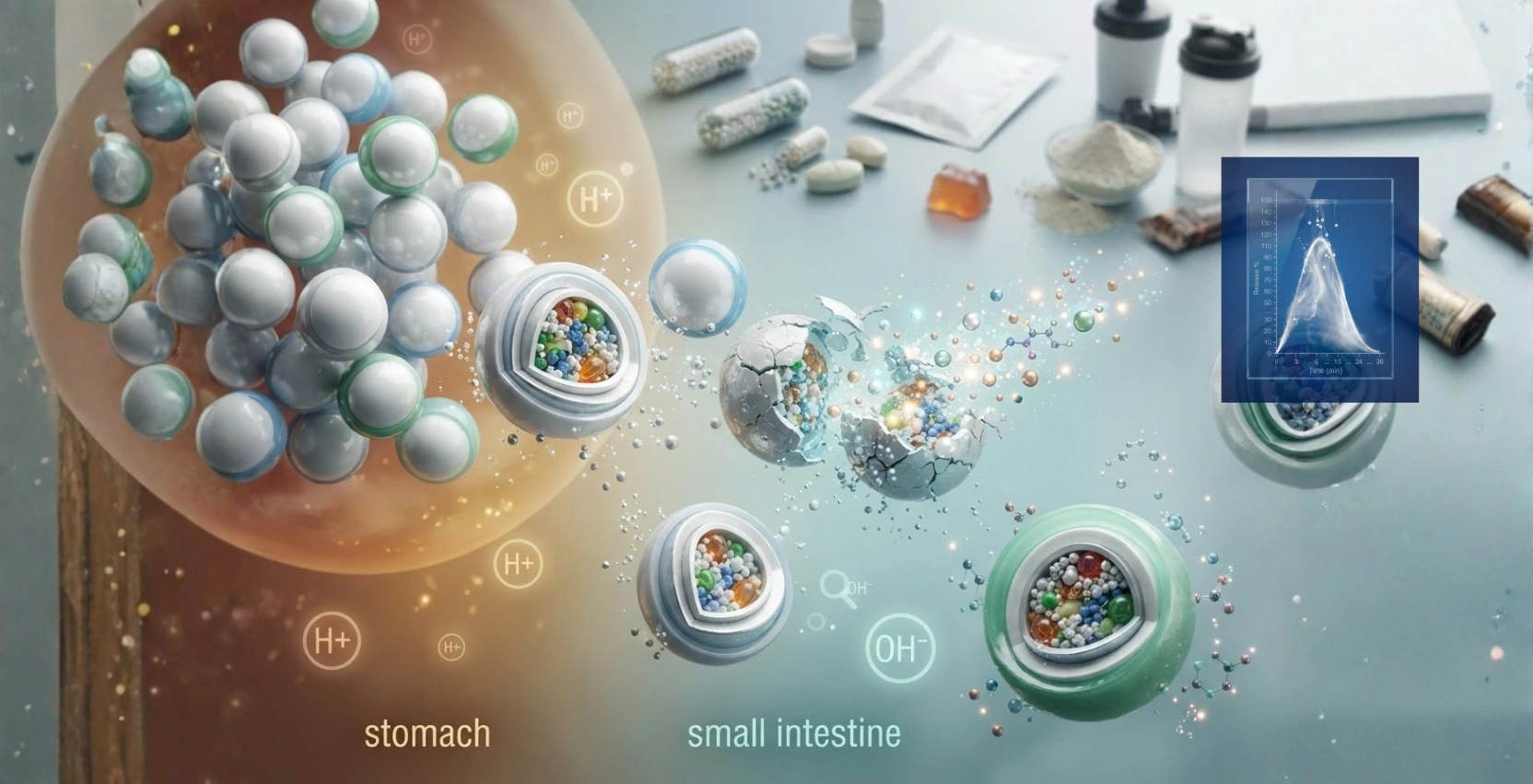
Discover how delayed-release beadlets help control nutrient release, protect sensitive ingredients, improve stability, and enable flexible nutraceutical formulations.
Read More →
Aishwarya
09 August 2026
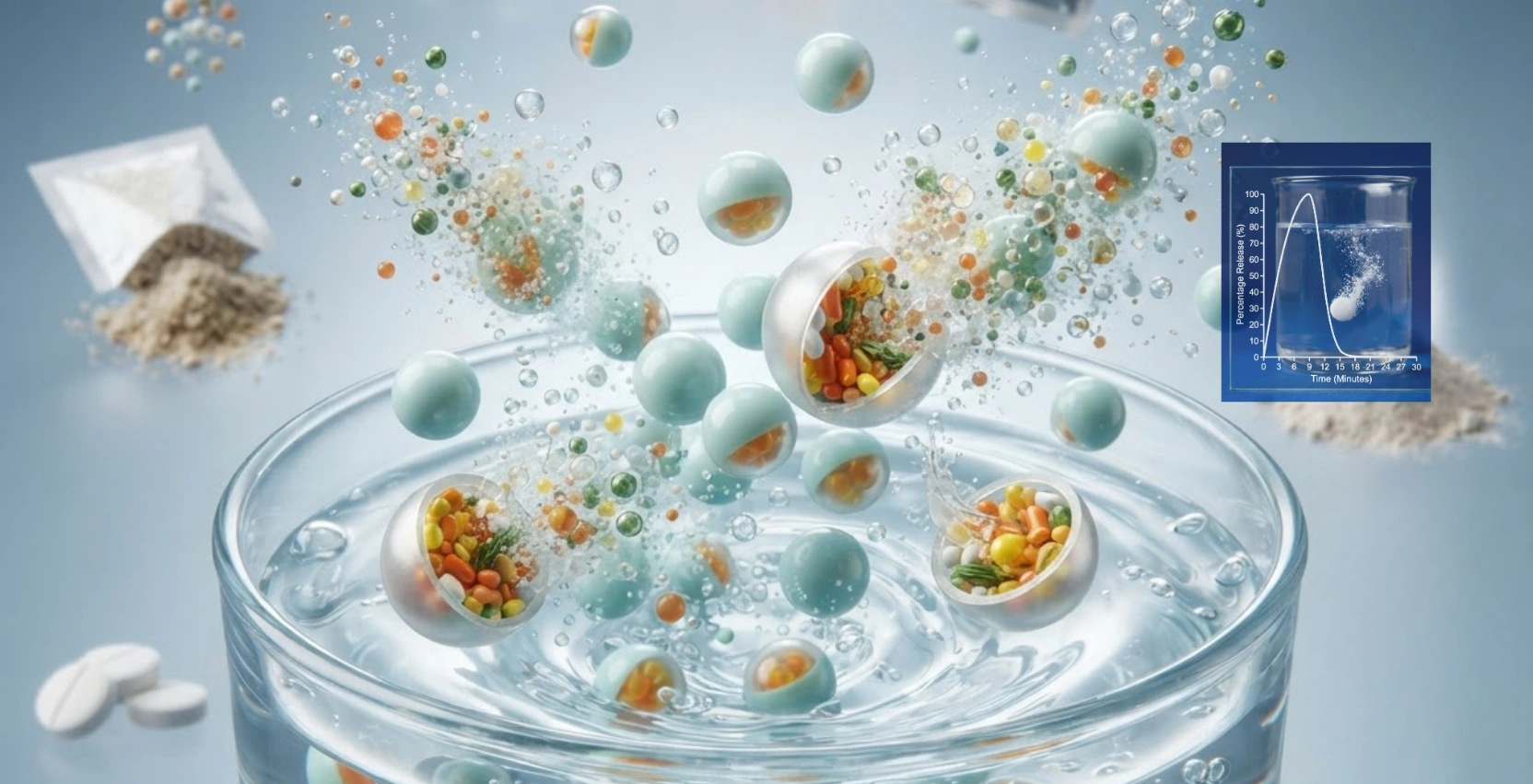
Discover how immediate-release beadlets improve nutraceutical formulations with rapid ingredient availability, better handling, taste masking, stability, and flexibility.
Read More →
Aishwarya
07 August 2026
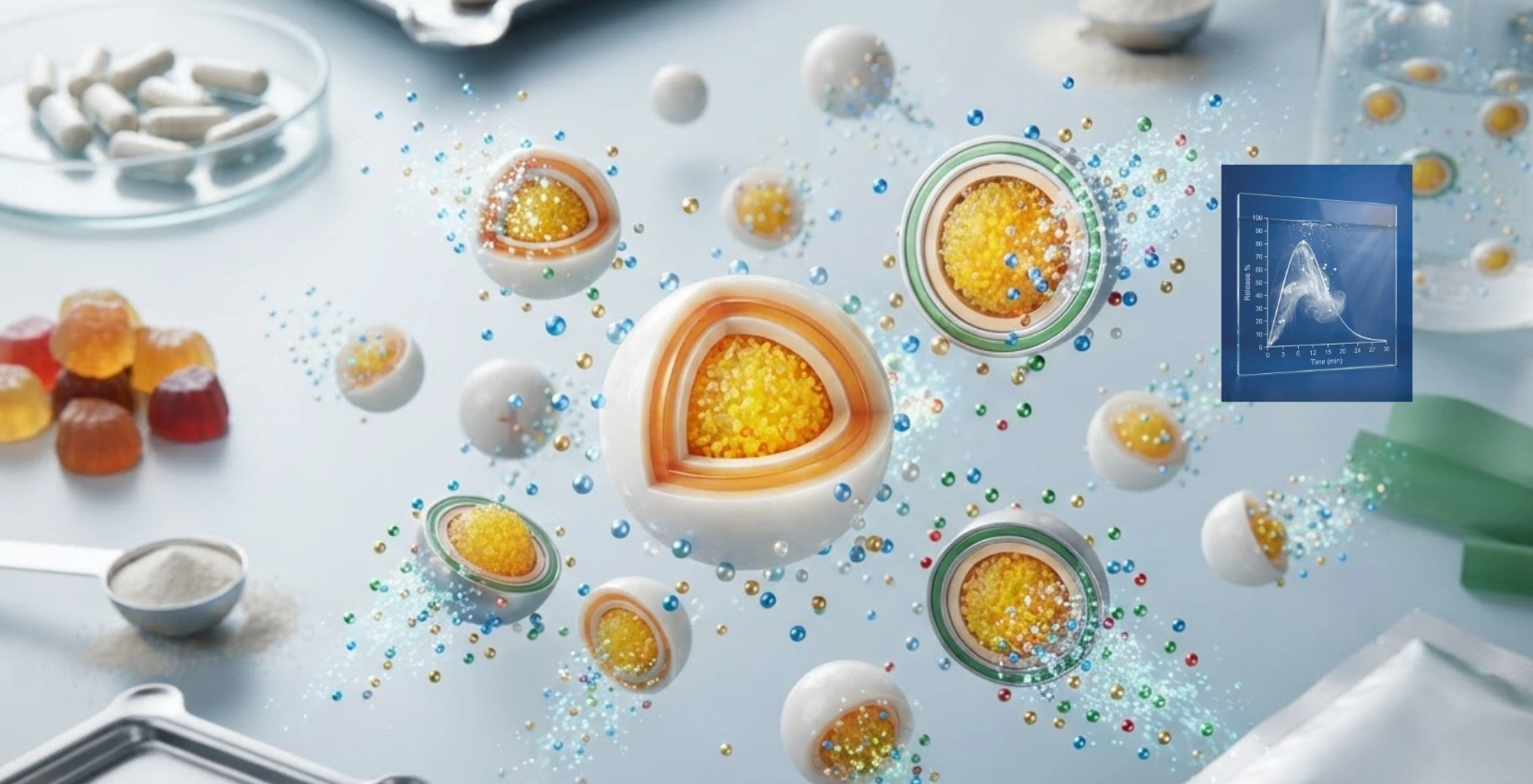
Discover how sustained-release beadlets control nutrient release, improve formulation flexibility, and support stable nutraceutical products across multiple delivery formats.
Read More →

INDIA - CORPORATE OFFICE
Unit No. 1, 2nd Floor, Vicino (Mega Mall), New Link Rd, Oshiwara, Andheri West, Mumbai, Maharashtra, India. 400102
MANUFACTURING FACILITY
Unit No. 1, Survey No. 52/2, NH8, Shirsad, Vajreshwari Road, Opp. Mandvi Police Station, Village - Mandvi, Taluka- Vasai, District- Palghar 401 303, India.