Discover how encapsulation transforms challenging nutraceutical ingredients into stable, formulation-ready ingredients for innovative supplement products.
Written By
Aishwarya
Published on
03 September 2026
Tags
Nutraceutical ingredients can present several challenges during formulation and manufacturing, particularly when they are sensitive or have poor physical properties
Moisture and heat sensitivity
Some ingredients can degrade when exposed to moisture or processing heat, affecting their stability and quality.
Oxidation and Light Sensitivity
Exposure to oxygen and light can degrade ingredients and reduce their potency over time.
Poor Solubility or Dispersion
Some ingredients do not dissolve or distribute evenly, making uniform incorporation into the final product difficult.
Strong Taste, Bitterness, or Odor
Certain botanicals, amino acids, and active ingredients can have unpleasant sensory characteristics that affect consumer acceptance.
Volatility
Volatile ingredients may evaporate or lose their characteristic properties during processing and storage.
Ingredient Compatibility
Some actives may interact with other formulation ingredients, potentially affecting stability, performance, or shelf life.
These challenges can make otherwise valuable ingredients difficult to incorporate into convenient, stable nutraceutical products, creating an opportunity for encapsulation technology to improve formulation performance.
Encapsulating the active ingredient within a coating or matrix changes its physical properties during processing, storage, and consumption. Encapsulation has been used successfully to address various nutraceutical issues.
Protection from Environmental Factors
The protective covering around the active ingredient may help protect sensitive ingredients from moisture, oxygen, temperature, and light, improving stability.
Taste & Odor Masking
Encapsulation may help mask unpleasant flavors or odors, making it easier to incorporate problem ingredients.
Improved Handling & Flowability
Converting unstable and easily degradable active powders or raw materials into smaller particles may improve handling and blending during manufacturing.
Controlled or Modified Release
Depending on the encapsulation technology used, the encapsulated beadlet can be formulated or designed to achieve the desired release of the active substance.
Improved Formulation Compatibility
The encapsulation shell provides a physical barrier to prevent unwanted interactions between different substances and allows formulation of different actives in one product.
Overall, encapsulation can turn challenging raw ingredients into more formulation-friendly ingredients, giving manufacturers greater flexibility in developing nutraceutical products.
Encapsulation is not a universal procedure. The choice of technology depends on the active component's properties, the required release pattern, processing parameters, and the desired finished product. The right system choice helps ensure consistent performance of the encapsulated active component from production to use.
Microencapsulation vs Beadlet -Based Systems
Microencapsulation provides a thin coating on each particle, whereas beadlet technology provides larger, flowable particles that are easy to manipulate and incorporate into formulations.
Immediate, Sustained, or Delayed Release
You can regulate the release of different components based on the required release profile. Some components may require rapid release, while others may require gradual or delayed release.
Choosing the Right Coating or Matrix
The choice of coating substance or matrix depends on the drug's stability, compatibility, solubility, and purpose. The right material provides the necessary protection and delivery properties.
Particle Size and Active Loading
Particle size affects flowability, blending, sensory characteristics, and compatibility with the dosage form. Optimize active loading to achieve the desired potency.
Matching Technology to the Final Product
Choose the encapsulation technique based on whether the ingredient will be incorporated into gummies, capsules, tablets, powder, sachets, beverages, or functional foods. The technology must survive the required process conditions while retaining the necessary product functionality.
Ultimately, selecting the right encapsulation method means matching the ingredient's challenges to the product's demands.
Beyond protecting the active ingredient, encapsulation can offer other benefits in nutraceutical manufacturing. Encapsulation helps alter the physical and functional characteristics of difficult ingredients, making them easier to process.
Better handling of difficult ingredients
Encapsulation can turn tough-to-handle materials into easier-to-handle ones, simplifying handling.
Improved powder flow and processing
Encapsulated ingredients can offer better flow properties and more uniform particle characteristics, supporting smoother blending, filling, and dosing.
Reduced interaction between incompatible ingredients
This outer layer may buffer interactions between ingredients during processing and storage.
Greater stability during manufacturing
Encapsulation may protect the active substance from heat, moisture, oxygen, and mechanical damage during formulation processing.
Compatibility with different manufacturing processes
With proper encapsulation, manufacturers can add encapsulated ingredients to process steps such as mixing, compaction, granulation, and tablet filling without affecting the ingredients' properties.
Overall, encapsulation makes it possible to process problematic nutraceutical ingredients effectively, improving efficiency and uniformity throughout ingredient processing and manufacturing.
The next challenge after successfully encapsulating an active ingredient is incorporating it into the final nutraceutical product while retaining all its qualities. Encapsulated ingredients may be designed for different forms of administration, and the choice of formulation and manufacturing method should align with the ingredient's features.
Incorporation into different delivery formats
Encapsulated components can be added to capsules and tablets through blending and compaction, whereas gummies and nutrition bars require closer attention to temperature, moisture content, and other processing parameters. Encapsulated products can also be utilized in powder blends and sachets, with flow properties being among the key attributes. For functional beverages, consider dispersibility and stability.
Maintaining uniform ingredient distribution
Uniform distribution of the formulation is critical to ensure the required level of the active substance in each portion. Segregation may occur during handling and processing if the encapsulated substance differs from other formulation ingredients in particle features such as size, density, shape, and flowability.
Processing consideration
The encapsulated substance must also survive the final product's production process. Variables such as temperature, humidity, pressure, mixing energy, and processing time can affect the coating material's stability. This means the formulator must select an encapsulation technology that survives production without affecting the active substance's desired properties.
Dosage uniformity and product consistency
Dosing consistency is especially crucial for formulations with high-concentration ingredients. Good particle distribution, proper loading of active compounds, and correct mixing processes help achieve the right amount of the ingredient in each capsule, tablet, gummy, sachet, or serving.
In any case, nutraceutical development is not complete without encapsulation, as the encapsulated ingredient must be formulated to fit the final dosing format and production processes.
Encapsulation technology may also remain advantageous even after incorporating the active substance into the final product. Encapsulation can improve stability, sensory characteristics, ingredient compatibility, and consistent active-substance performance by protecting the active substance and enabling interactions within the formulation matrix.
Improved stability during storage
The encapsulation layer may help protect sensitive components from moisture, oxygen, light, and other environmental factors, helping maintain component quality.
Better taste and sensory experience
Through encapsulation, consumers will encounter unpleasant-smelling or tasting ingredients less often, enhancing the product's sensory properties.
Protection of sensitive ingredients
Components susceptible to temperature, humidity, oxidation, or other sensitivities may require an additional layer of protection in the formula.
Improved formulation flexibility
Encapsulation helps simplify integrating difficult-to-handle excipients into various drug-delivery forms and multi-excipient formulations.
Consistent ingredient delivery
If properly engineered, encapsulated active substances should ensure better distribution inside the final formulation, thus delivering consistent dosages of the active substance per portion.
Potentially longer shelf life
By reducing exposure to factors that can accelerate ingredient degradation, encapsulation may help preserve product quality longer, provided the overall formulation and packaging are appropriately designed.
However, encapsulation can influence not only the drug component but also other properties of the nutraceutical formulation, such as stability and texture.
Encapsulation can transform a difficult raw material into an ingredient that is easy to formulate. This is because formulators are not restricted by characteristics such as bad taste, instability, moisture sensitivity, or incompatibility. Formulators can do this by using encapsulation techniques to control the ingredient's behavior within the formulation.
Working with challenging ingredients
Encapsulation may help formulate ingredients that are hard to incorporate into products. Protection from the environment, taste masking, and better processability can enhance formulation options.
Creating differentiated dosage forms
As encapsulation improves stability and processing, ingredients become suitable for inclusion in various delivery systems such as gummies, capsules, tablets, powdered forms, sachets, nutrition bars, and drinks. Thus, product lines can expand into less traditional supplement forms.
Combining multiple actives
Today's nutraceutical products may contain a blend of vitamins, minerals, herbs, amino acids, or other functional ingredients. Encapsulation helps reduce interactions among selected ingredients, making it possible to formulate multi-active blends with different ingredients.
Developing convenient consumer-friendly formats
Consumer demand is increasingly shifting towards products that are portable and convenient to use. Encapsulation helps to develop new ways to create innovative forms which enhance taste, stability, and convenience of use.
From raw ingredient to formulation-ready ingredient
What matters most about encapsulation is how it affects an ingredient's functional properties. Encapsulation improves stability, handleability, compatibility, sensory properties, or controlled release, turning an otherwise difficult-to-use raw material into a useful ingredient.
Encapsulation is more than another step in the production process; it is a formulation approach that can turn a challenge into an opportunity for a product development breakthrough.
Aishwarya
25 August 2026
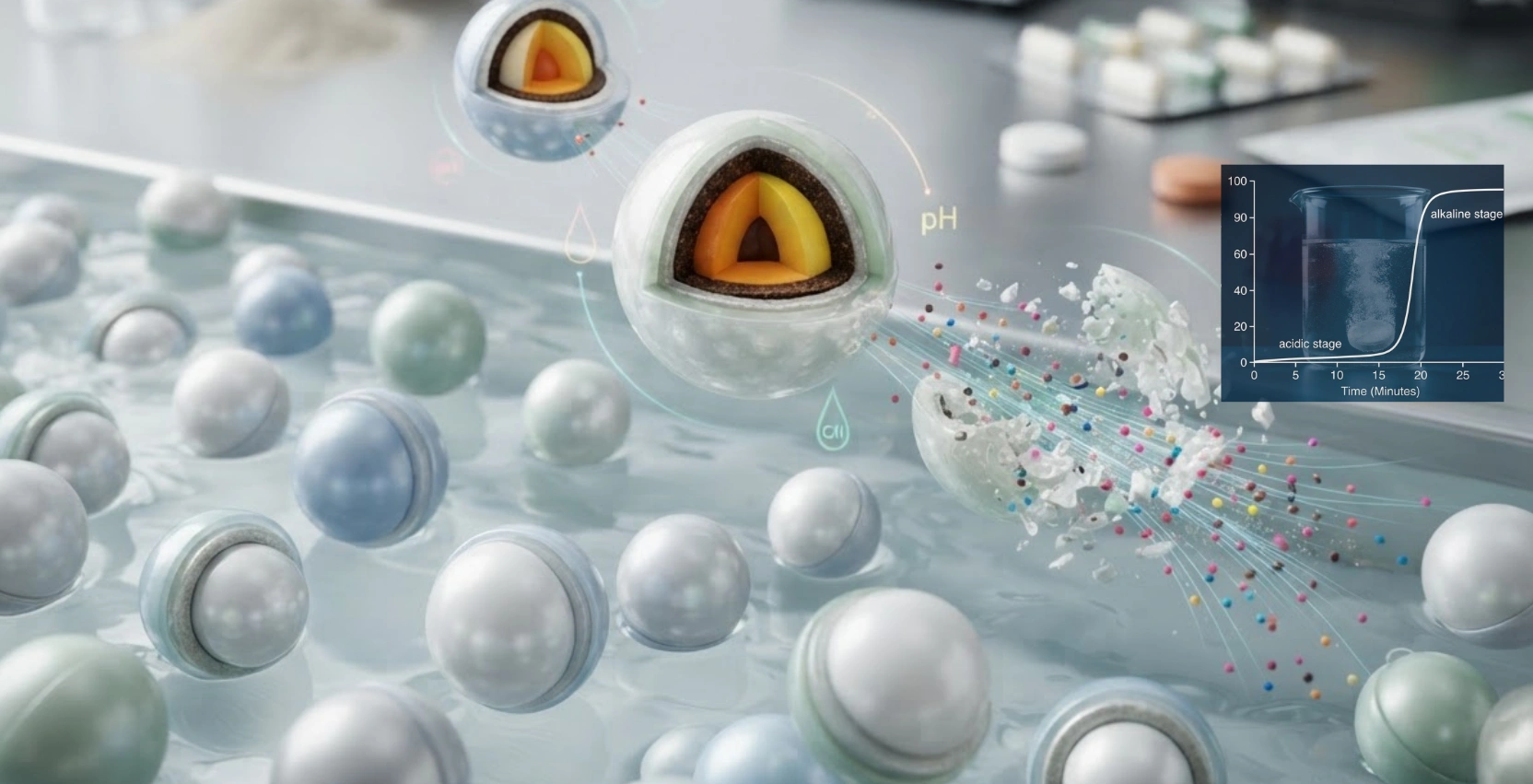
Discover how enteric-coated beadlets protect sensitive nutraceuticals from stomach acid and enable controlled release in the intestinal environment.
Read More →
Aishwarya
29 August 2026
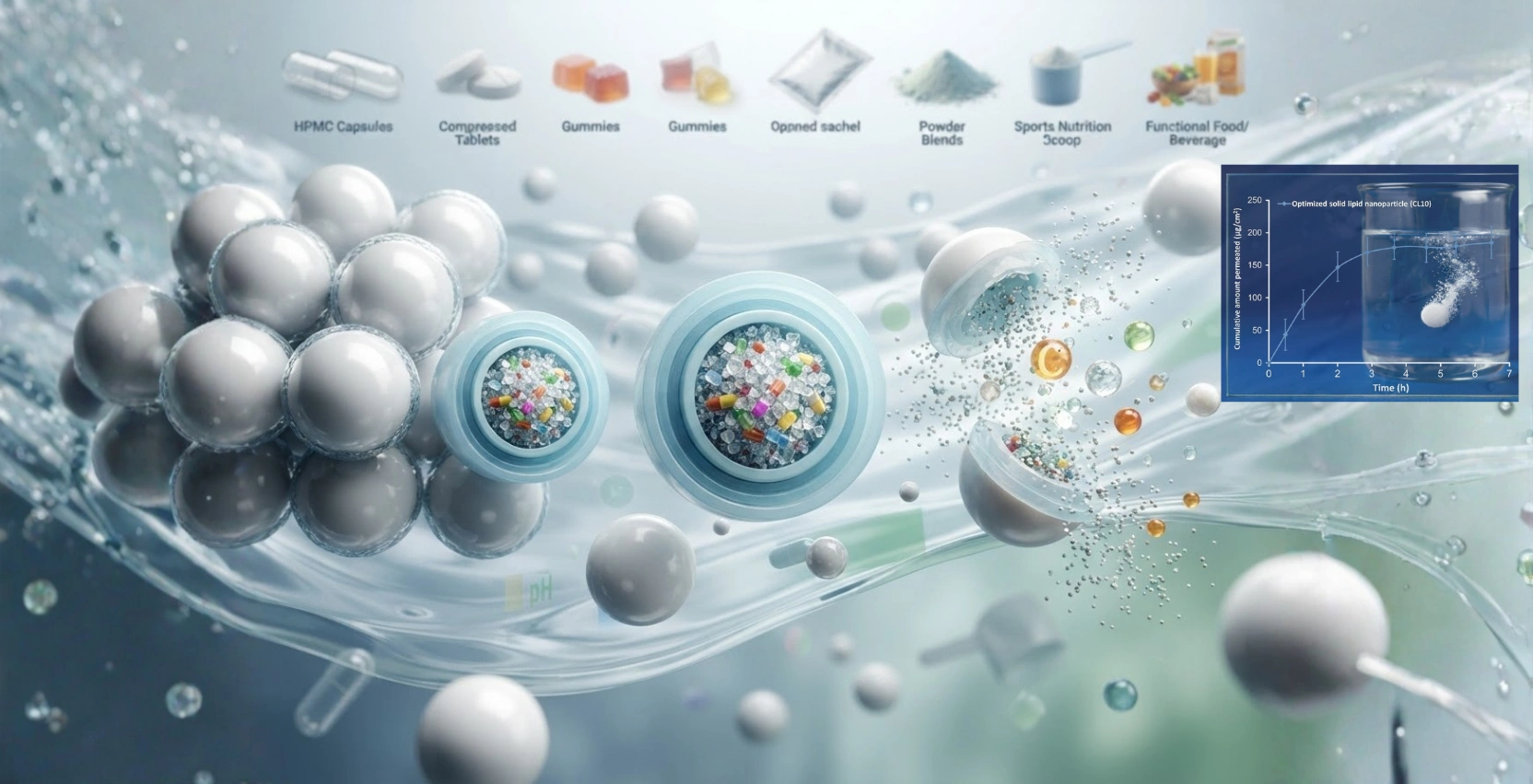
Discover how lipid-coated beadlets improve nutraceutical formulations by protecting sensitive ingredients, enhancing handling, masking taste, and controlling release.
Read More →
Aishwarya
07 August 2026
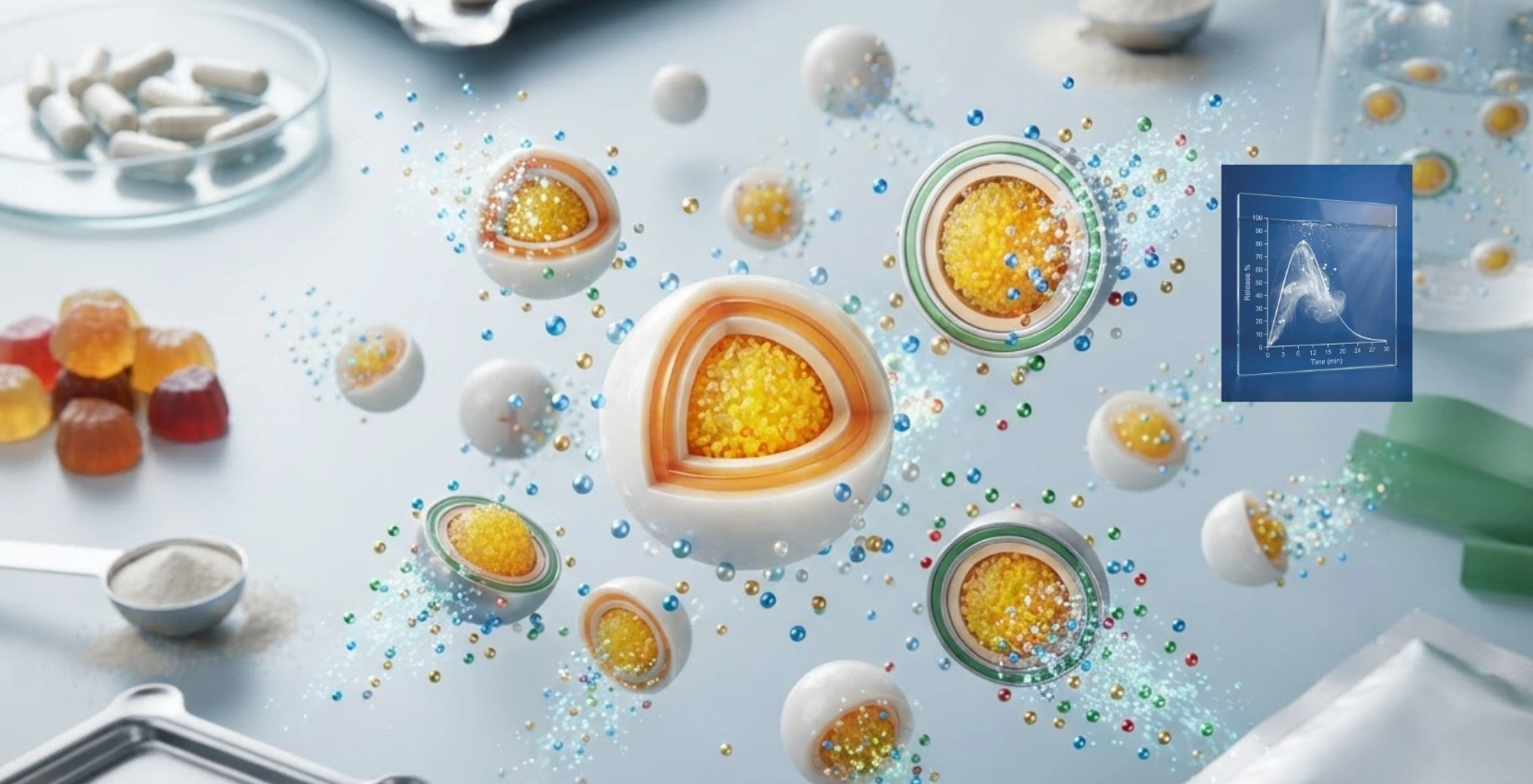
Discover how sustained-release beadlets control nutrient release, improve formulation flexibility, and support stable nutraceutical products across multiple delivery formats.
Read More →

Aishwarya
03 September 2026
Discover how encapsulation transforms challenging nutraceutical ingredients into stable, formulation-ready ingredients for innovative supplement products.
Read More →
Aishwarya
09 August 2026
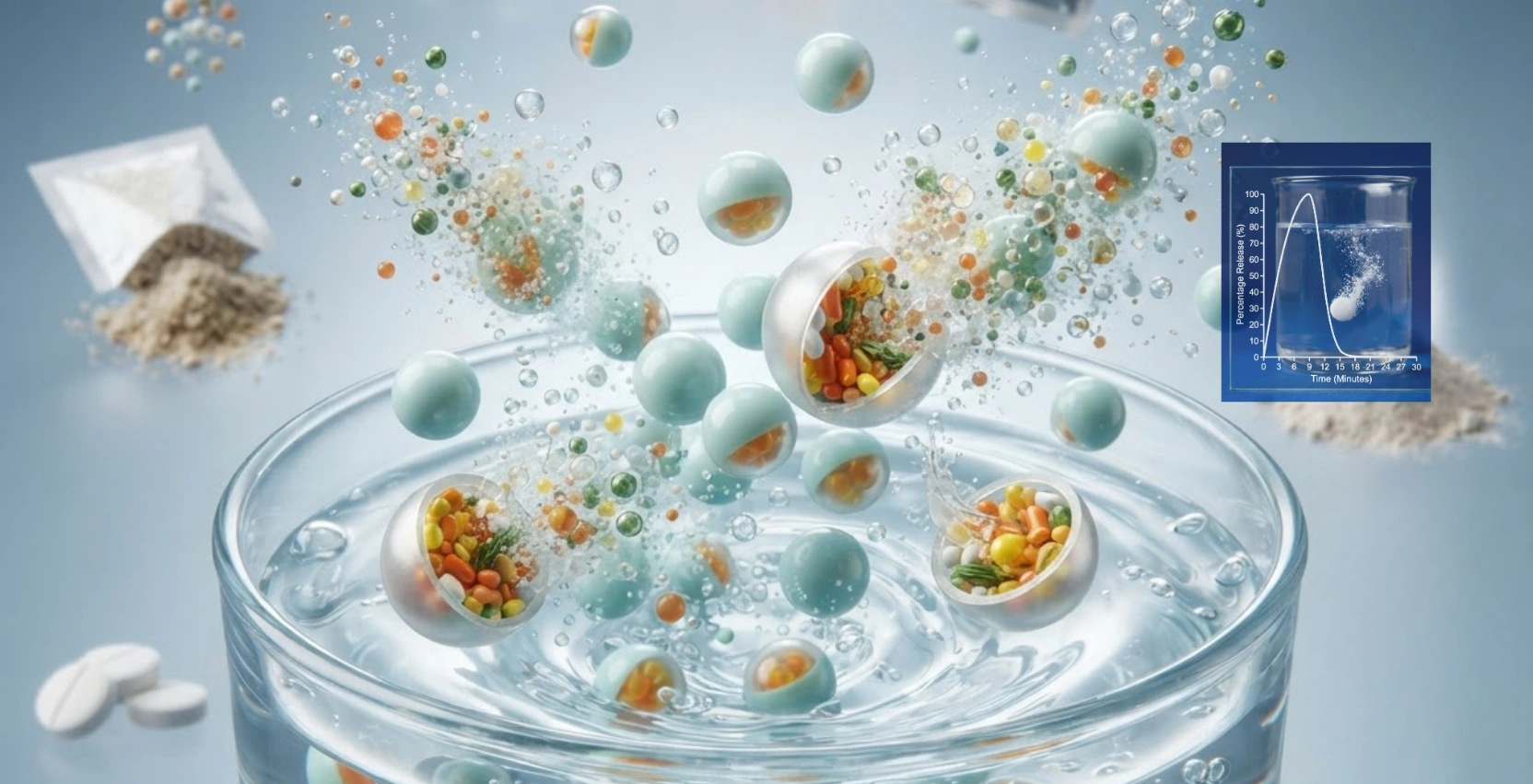
Discover how immediate-release beadlets improve nutraceutical formulations with rapid ingredient availability, better handling, taste masking, stability, and flexibility.
Read More →
Aishwarya
07 August 2026
Discover how sustained-release beadlets control nutrient release, improve formulation flexibility, and support stable nutraceutical products across multiple delivery formats.
Read More →

INDIA - CORPORATE OFFICE
Unit No. 1, 2nd Floor, Vicino (Mega Mall), New Link Rd, Oshiwara, Andheri West, Mumbai, Maharashtra, India. 400102
MANUFACTURING FACILITY
Unit No. 1, Survey No. 52/2, NH8, Shirsad, Vajreshwari Road, Opp. Mandvi Police Station, Village - Mandvi, Taluka- Vasai, District- Palghar 401 303, India.