Discover how encapsulated creatine can improve stability, taste, compatibility, and processing while enabling gummies, RTD beverages, capsules, bars, and other formats.
Written By
Aishwarya
Published on
29 August 2026
Tags
Over many years, creatine has proven to be among the most sought-after supplements in sports nutrition, and it is mostly used in powdered form. Athletes and sports lovers have preferred powdered creatine because of its efficiency and convenience. But as the nutraceutical industry develops, people tend to shift their preferences from powders to other forms.
Due to increasing demand, there has been a rising trend of creating new types of creatine formulations, including functional gummies, ready-to-drink beverages, capsules, chewables, stick packs, and nutrition bars. Although these innovative delivery forms can enhance convenience, they still create challenges in product formulation. Standard creatine can have problems with bad taste, moisture sensitivity, compatibility, and instability during processing.
To overcome these problems, many manufacturers have been looking at encapsulation technology. Encapsulation makes it possible to cover creatine with a protective layer, which helps improve stability, reduce taste issues, and improve compatibility with other ingredients. It also enables developers to introduce new forms of creatine.
There have been many changes in the sports nutrition industry over time, along with shifts in consumer preferences. Even though creatine powder remains widespread, contemporary consumers are seeking products that make supplement intake more convenient, portable, and practical in their everyday lives. This has prompted companies to search for alternative ways to deliver their products to consumers.
One of the important reasons behind this development is the rising demand for convenient supplements. The hectic lifestyles of people have made products that do not need to be prepared highly popular.
On the other hand, creatine is moving from powders to functional foods and beverages. Creatine has been incorporated into nutrition bars, RTD beverages, gummies, and other novel items in order to target more consumers with easy-to-consume nutrition products.
In addition, consumers want portable products they can take and use whenever they want, whether they are at the gym, at work, or traveling. This has enabled brands to develop products that are more convenient than traditional supplements.
For nutraceutical companies, this development provides a unique opportunity to differentiate their products. Nutraceutical manufacturers can diversify their product offerings and increase consumer interest by bringing creatine into new and novel formulations. But creating these products involves using ingredients that work well in varied formulations, thus requiring sophisticated formulation techniques like encapsulation.
Despite creatine being a popular component in sports nutrition, integrating it into current supplement formulations is sometimes difficult. With manufacturers diversifying into gummies, RTD products, nutrition bars, and chewables, among others, various difficulties need to be overcome.
Unpleasant taste and mouthfeel
Moisture sensitivity
Stability during processing
Compatibility with other active ingredients
Uniform distribution in the final product
However, encapsulation can serve as a useful technique that helps to overcome many of the problems related to traditional creatine formulation. Encapsulation involves creating a barrier around creatine that helps enhance its properties during processing and storage, as well as in the final product.
Improved stability
The most important advantage of encapsulation is increased ingredient stability. The barrier protects the creatine from any external influences such as humidity, oxygen, temperature, and other conditions that may impact its quality during processing and storage.
Taste Masking
Creatine can have an unpleasant taste or a gritty texture, especially when found in supplements such as gummies and drinks. The encapsulation process is designed to limit creatine's interaction with taste buds for better results.
Better ingredient compatibility
Many of these sports nutrition products contain creatine along with vitamins, minerals, amino acids, electrolytes, herbs, and other active components. Capsule technology can help lower the risk of interactions among these components. This makes it possible to develop stable, multi-component sports nutrition products.
Enhanced processing performance
The encapsulated form of creatine is manufactured in a way that improves performance during the manufacturing process. The coating will facilitate easier handling of the ingredients and make processing during activities such as blending and compressing easier.
Great formulation flexibility
Creatine encapsulation makes it possible to include the substance in a variety of supplement forms other than powders. It can be used in formulations including functional gummies, ready-to-drink products, capsules, tablets, stick packs, bars, and powders. This offers more options for brands to create new and innovative products in accordance with changing consumer demands.
Solving the key formulation challenges associated with creatine, encapsulation helps brands unleash the true potential of this ingredient.
The flexibility in using encapsulated creatine makes it possible to include the ingredient in various products for sport and wellness nutrition applications. This flexibility will allow the development of new supplement formats to meet changing consumer and market needs.
Some of the key applications of the encapsulated creatine include:
Functional gummies
Ready-to-drink (RTD) beverages
Powder blends
Stick packs
Capsules
Tablets
Nutrition bars
Pre-workout supplements
Post-workout supplements
With the increasing need for easy-to-use, differentiated products, encapsulated creatine gives manufacturers the opportunity to formulate in various delivery systems without compromising product performance.
With the sports nutrition industry becoming more competitive, companies are seeking ways to distinguish themselves from others, moving past merely focusing on ingredient effectiveness alone. Today’s consumers demand supplements that are not only performance enhancers but are also convenient, palatable, and novel in form. Encapsulated creatine offers companies the chance to do just that by addressing formulation problems.
Product Differentiation
Due to the wide variety of creatine supplements available in the market today, companies try to find methods of differentiation. Encapsulation makes it possible for them to develop novel formulations that can create an edge.
Better consumer experience
Consumers today prefer products that are convenient to consume and fun to use. Encapsulated creatine helps improve taste, mouthfeel, and formulation.
Premium product positioning
Encapsulation enables companies to create superior product formulations with additional functional elements. This advantage enables the development of superior sports nutrition products.
Innovations in delivery format
Encapsulation enables manufacturers to deliver creatine through more creative packaging options beyond powders alone, such as gummies, ready-to-drink, capsules, tablets, and nutritional bars. This provides a platform for brands to develop new products for consumers.
Meeting changing consumer preferences
Consumers' tastes are shifting toward convenient, portable, and readily available supplements that suit their modern-day lifestyle. Encapsulating creatine allows manufacturers to produce products that meet these requirements without compromising their formulation.
As the sports nutrition industry keeps progressing, innovation lies not only in the active ingredient but in how it can be administered. Though creatine continues to remain among the most reputable ingredients used in the sports nutrition industry, the increased need for convenience and differentiation in supplements has opened doors to new formulation options. Through encapsulation, sports nutrition companies have been able to take advantage of more creative ways of using creatine through products such as gummies, ready-to-drink formulations, capsules, tablets, stick packets, and nutrition bars.
By resolving formulation issues including stability, flavor, ingredient compatibility, and processability, encapsulation of creatine helps brands formulate quality products in line with evolving consumer preferences. It allows formulators more freedom to develop new products without necessarily sacrificing product quality.
At Umang Nutraceuticals, our focus is on providing bespoke encapsulation of creatine beadlets to support the development of innovative nutraceutical formulations. We are well-versed in taste masking, component protection, bespoke particle sizes, and bespoke release profiles. These capabilities will assist you in creating unique and premium formulations for various types of delivery systems.

Aishwarya
06 August 2026
Discover how encapsulated beadlets improve gummy formulations by enhancing ingredient stability, masking taste, extending shelf life, and protecting sensitive actives.
Read More →

Aishwarya
03 September 2026
Discover how encapsulation transforms challenging nutraceutical ingredients into stable, formulation-ready ingredients for innovative supplement products.
Read More →

Aishwarya
21 August 2026
Discover how delayed-release beadlets help control nutrient release, protect sensitive ingredients, improve stability, and enable flexible nutraceutical formulations.
Read More →
Aishwarya
25 August 2026
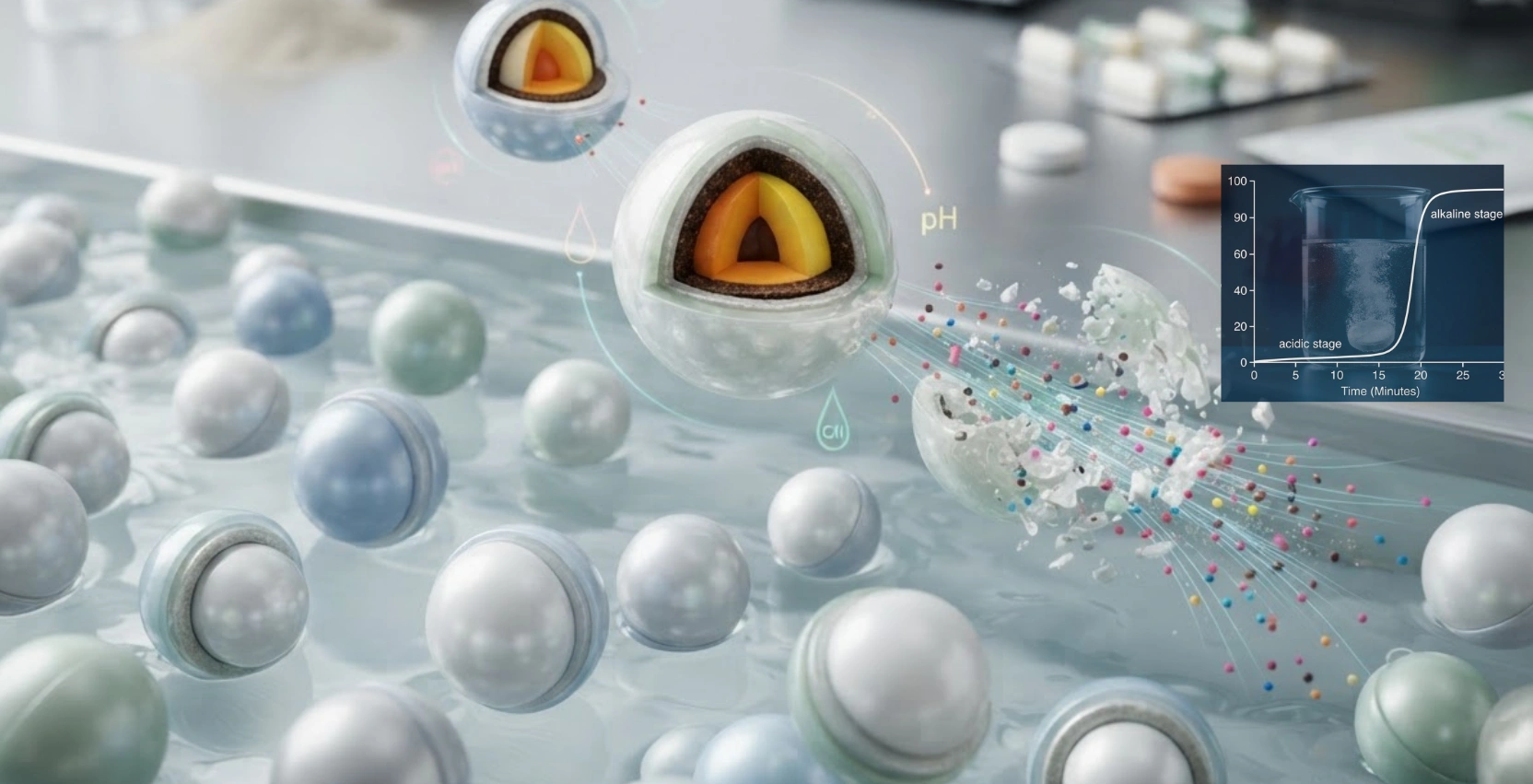
Discover how enteric-coated beadlets protect sensitive nutraceuticals from stomach acid and enable controlled release in the intestinal environment.
Read More →
Aishwarya
06 August 2026
Discover how encapsulated beadlets improve gummy formulations by enhancing ingredient stability, masking taste, extending shelf life, and protecting sensitive actives.
Read More →
Aishwarya
03 September 2026
Discover how encapsulation transforms challenging nutraceutical ingredients into stable, formulation-ready ingredients for innovative supplement products.
Read More →

INDIA - CORPORATE OFFICE
Unit No. 1, 2nd Floor, Vicino (Mega Mall), New Link Rd, Oshiwara, Andheri West, Mumbai, Maharashtra, India. 400102
MANUFACTURING FACILITY
Unit No. 1, Survey No. 52/2, NH8, Shirsad, Vajreshwari Road, Opp. Mandvi Police Station, Village - Mandvi, Taluka- Vasai, District- Palghar 401 303, India.