Discover how sustained-release beadlets control nutrient release, improve formulation flexibility, and support stable nutraceutical products across multiple delivery formats.
Written By
Aishwarya
Published on
07 August 2026
Tags
Drug release has long been a concern in pharmaceuticals and nutraceuticals, especially regarding patient compliance. Traditional dosing has led to several issues and many errors. Increased drug levels at an early stage of therapy can lead to side effects/toxicity. Drug levels can become very low between doses, making the effect of the medication very minimal.
Some drugs also have to be taken frequently to be effective, something that makes adherence to therapy very challenging. Rapid metabolism or excretion can shorten the drug's duration of action. Such variations in the levels of the drug can make it hard to have control over the effects of the drug, whereas high levels of the drug can be associated with inefficiency of the dose.
The goal of sustained release dosage forms is to lessen these side effects through the controlled delivery of the medicine in a continuous level of drug concentration over a certain period of time.
Sustained release is a type of drug release in which the required drug is released from the dosage form in a controlled manner, rather than releasing the entire dose at once. In pharmaceutical formulations, sustained-release pellets use specialized formulation and coating technologies to control the drug release rate.
Sustained-release pellets are formulated to release the active pharmaceutical ingredient (API) slowly over time rather than all at once. This allows extended drug availability and may help decrease dosing frequency, depending on the drug and the required effect.
In sustained-release pellet formulations, the API-loaded pellets are covered with a special coating layer of the release-controlling polymer. After administration, gastrointestinal fluids slowly penetrate the coating layer and release the drug in a controlled manner. In other words, the coating layer acts as a barrier that controls the rate of API release.
The release rate can be regulated by varying parameters such as the polymer type, concentration, coating thickness, pellet size, porosity, and drug content. Thus, an optimal coating provides a slow, regulated release rather than rapid release of the entire drug dose.
Because each pellet serves as a separate unit of the drug delivery system, hundreds or thousands of pellets can be packed into a capsule or MUPS tablet to provide the needed release pattern. This makes sustained-release pellet technology flexible for developing oral formulations.
In nutraceutical formulations, sustained-release technology can be useful when an ingredient needs to be released slowly over a longer timeframe rather than being available instantly. This may be especially helpful in ingredients where the slow release is desired as part of the formula. Sustained-release technology allows greater flexibility in dose and delivery and helps create unique products beyond supplements.
Whether sustained release is needed depends on the ingredient's stability, absorption profile, delivery duration, dose requirements, and the final product form. Encapsulated beadlets or coated particles can be engineered to control the rate at which an ingredient is released.
Several factors affect the efficacy of a sustained-release nutraceutical formulation. Controlling these parameters is essential to ensure the desired release profile and ingredient stability.
Coating thickness
Coating thickness affects how quickly the ingredient is released. A thick coating can provide better control over the release rate.
Polymer or lipid selection
The polymer or lipid used in encapsulation determines the coating system's protective ability, permeability, and ingredient release. This depends on the nutraceutical ingredient and its release profile.
Particle size
Particle size may affect coating, flowability, dissolution, and active-ingredient release. The particles should be uniformly sized to perform effectively.
Active loading
Consider the ideal loading of the active component within the beadlet or encapsulated particle to reach the required activity level without compromising particle integrity.
Dissolution behavior
How the active ingredient is released in the medium, and how it dissolves, is an important consideration for making the delivery system predictable. Formulation and coating characteristics can be controlled accordingly.
Process parameters
Several manufacturing considerations, including spray rate, inlet/product temperature, drying conditions, atomization, and mixing, can affect coating uniformity.
Sustained-release delivery technology applies to many nutraceutical ingredients that need gradual release. Depending on the ingredient type and beadlet application, Umang Nutraceuticals can develop sustained-release beadlets for vitamins, minerals, herbs, carotenoids, amino acids, and other ingredients.
Examples of ingredients Umang Nutraceuticals has used include Vitamin D3, Vitamin A, Beta-Carotene, Lutein, Curcumin, Nettle, Ginger, Ginseng, L-threonine, and dried Ferrous Sulfate, among others, in beadlet or customized-release formats. These ingredients can be made into beadlets or granules for nutraceutical applications such as capsules, tablets, gummies, powders, sachets, drinks, and other nutraceutical products.
The choice of ingredient and delivery method depends on several factors, including stability, release characteristics, dosage, process conditions, and the final product. This technique is adaptable and can be used for various nutraceuticals.
Sustained-release formulations offer various benefits for nutraceuticals, but their suitability depends on the ingredient and the desired product form.
Advantages
Beadlets can enable sustained nutrient release, offering additional design flexibility and the option to formulate supplements differently from standard formulas. Encapsulation may help protect fragile components during processing and storage, and improve taste, smell, handling, and compatibility with other active substances.
Limitations
Not all nutraceuticals can benefit from sustained-release technology because the final release profile depends on several factors, including the nutrient's properties, the coating used, particle size, active-agent concentration, and the manufacturing process. Achieving the desired release profile may require further formulation and testing, as well as ensuring the coating technology remains stable during manufacturing and throughout the product's shelf life.
Different delivery systems serve different functions depending on the types of nutraceuticals one wants to produce. The IR delivery system aims to ensure rapid release of the components. The SR delivery system facilitates gradual release of the components. The DR delivery system aims to facilitate delayed release of the components.
Various release technologies have been developed to meet the specific requirements of nutraceutical formulation. Immediate-release technology involves rapid release of an ingredient and can be used for ingredients that require rapid availability. Sustained-release technology has been developed for ingredients requiring release over a longer period. Delayed-release technology delays ingredient release until a particular point or condition is achieved and suits ingredients that need a delay before release. Enteric-coated technology protects an ingredient in the highly acidic environment of the stomach and ensures it is released after reaching a certain pH in the intestines. Lipid-coated technology uses lipid coatings to protect nutraceutical ingredients from unfavorable conditions and control ingredient release.
Umang Nutraceuticals custom beadlets provide customized encapsulation of nutraceutical active ingredients in various beadlets, based on application requirements for release, stability, and product formulation. Our products include immediate-release, sustained-release, and customized beadlets based on particle size, release properties, and active-ingredient content. We have an extensive range of ingredient types including vitamins, minerals, botanicals, amino acids, and carotenoids.
We help the nutraceutical industry develop products that deliver the required release profile despite challenges related to stability, taste, compatibility, and processability.
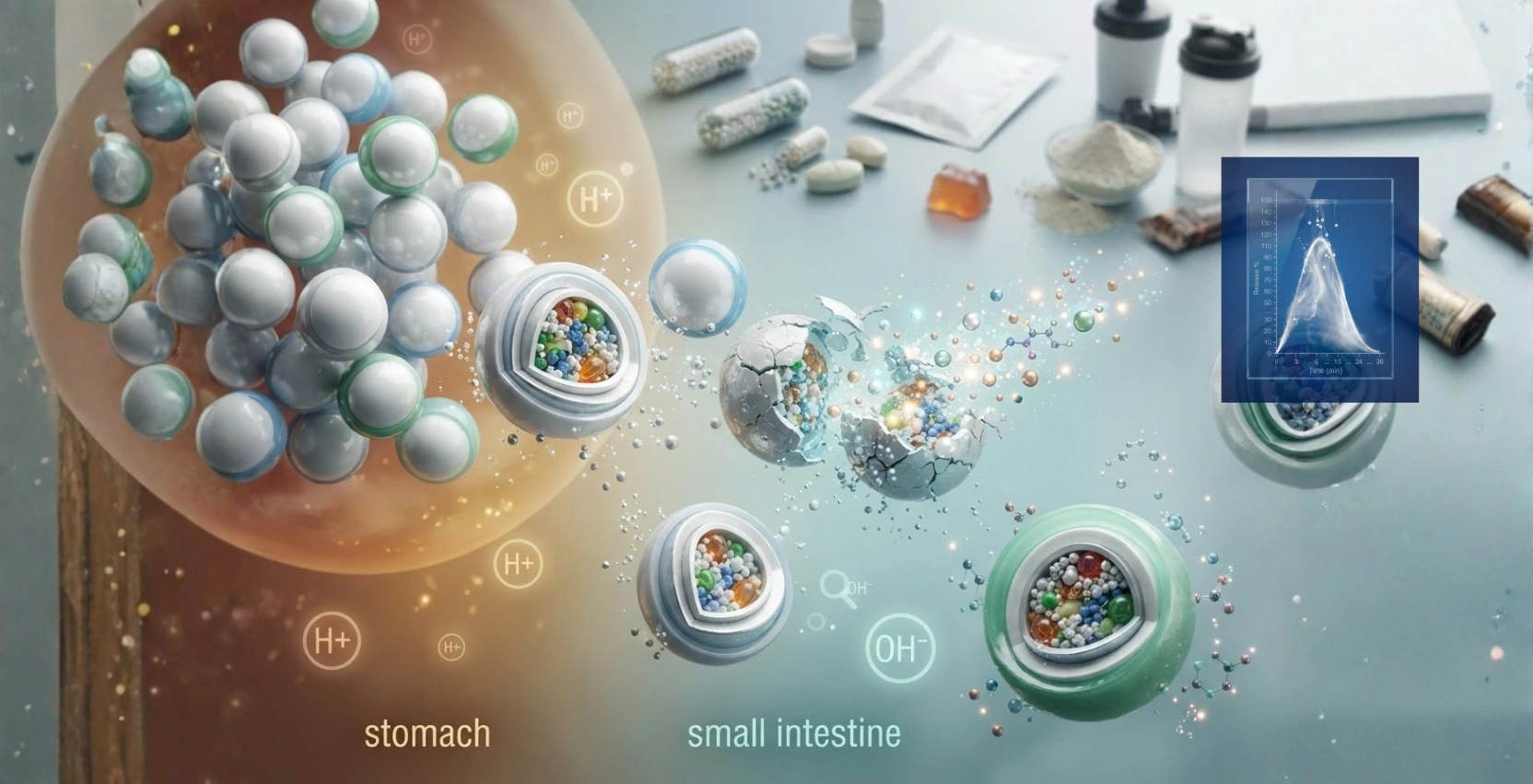
Aishwarya
21 August 2026
Discover how delayed-release beadlets help control nutrient release, protect sensitive ingredients, improve stability, and enable flexible nutraceutical formulations.
Read More →
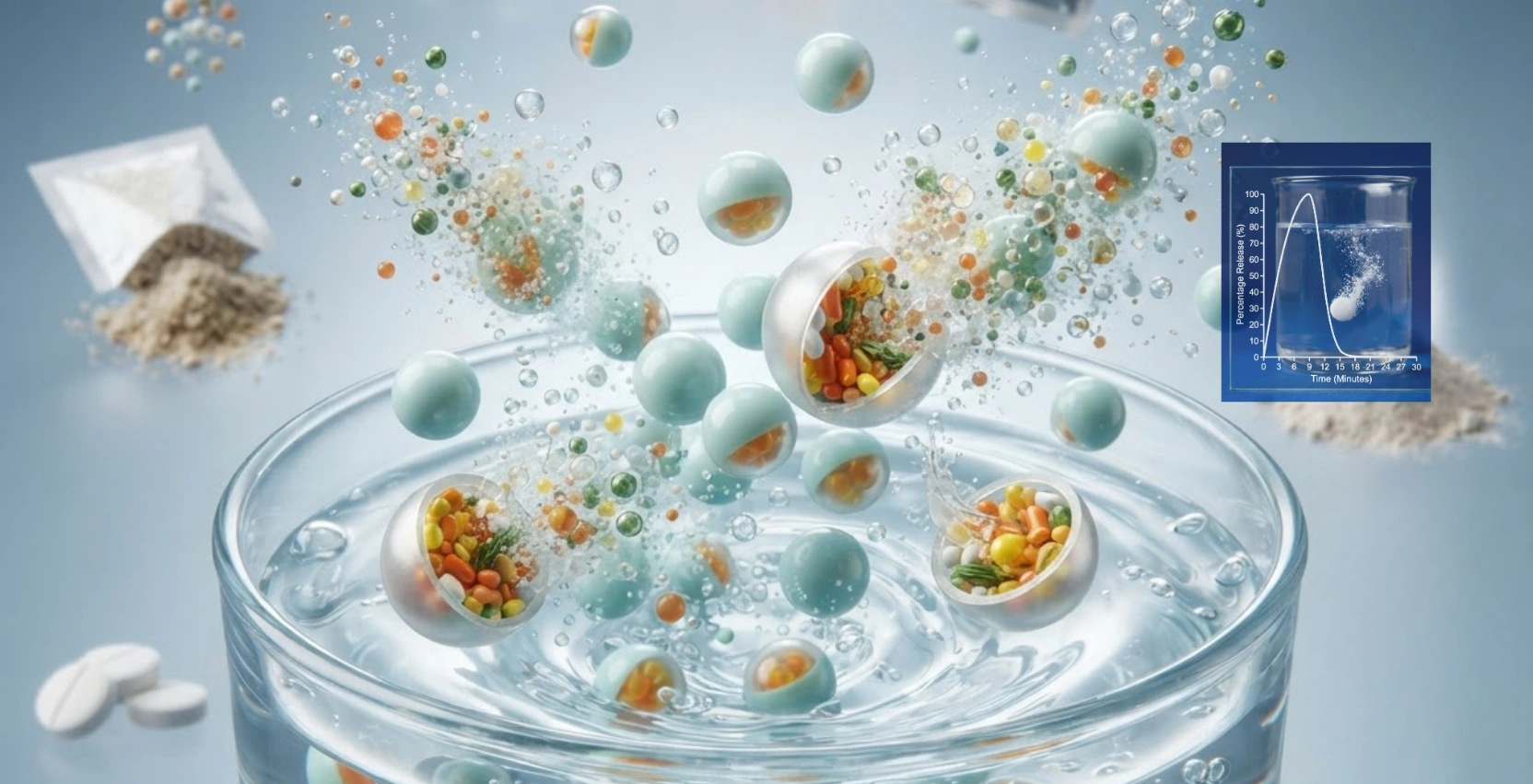
Aishwarya
09 August 2026
Discover how immediate-release beadlets improve nutraceutical formulations with rapid ingredient availability, better handling, taste masking, stability, and flexibility.
Read More →

Aishwarya
06 August 2026
Discover how encapsulated beadlets improve gummy formulations by enhancing ingredient stability, masking taste, extending shelf life, and protecting sensitive actives.
Read More →
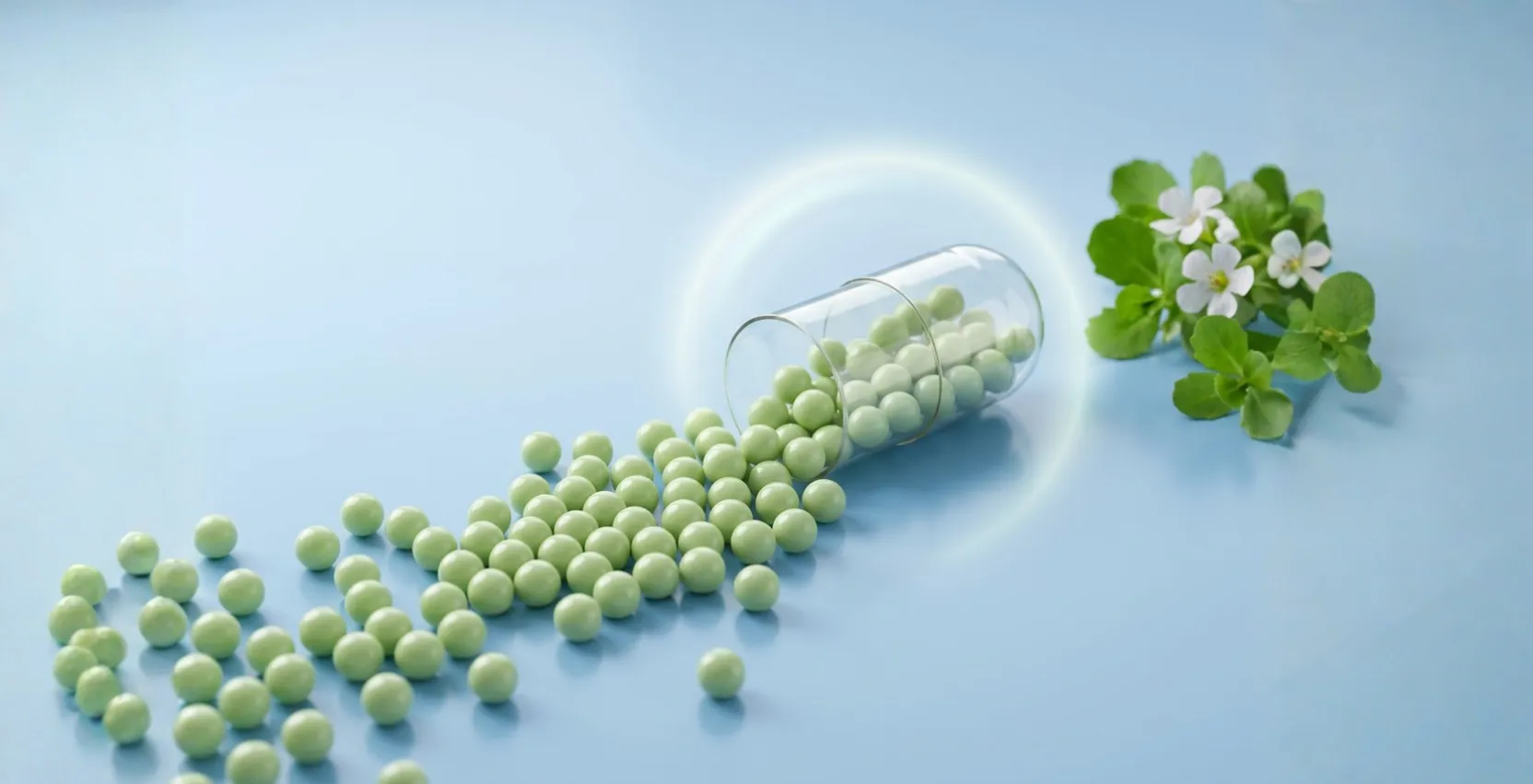
Aishwarya
03 September 2026
Discover how encapsulation transforms challenging nutraceutical ingredients into stable, formulation-ready ingredients for innovative supplement products.
Read More →
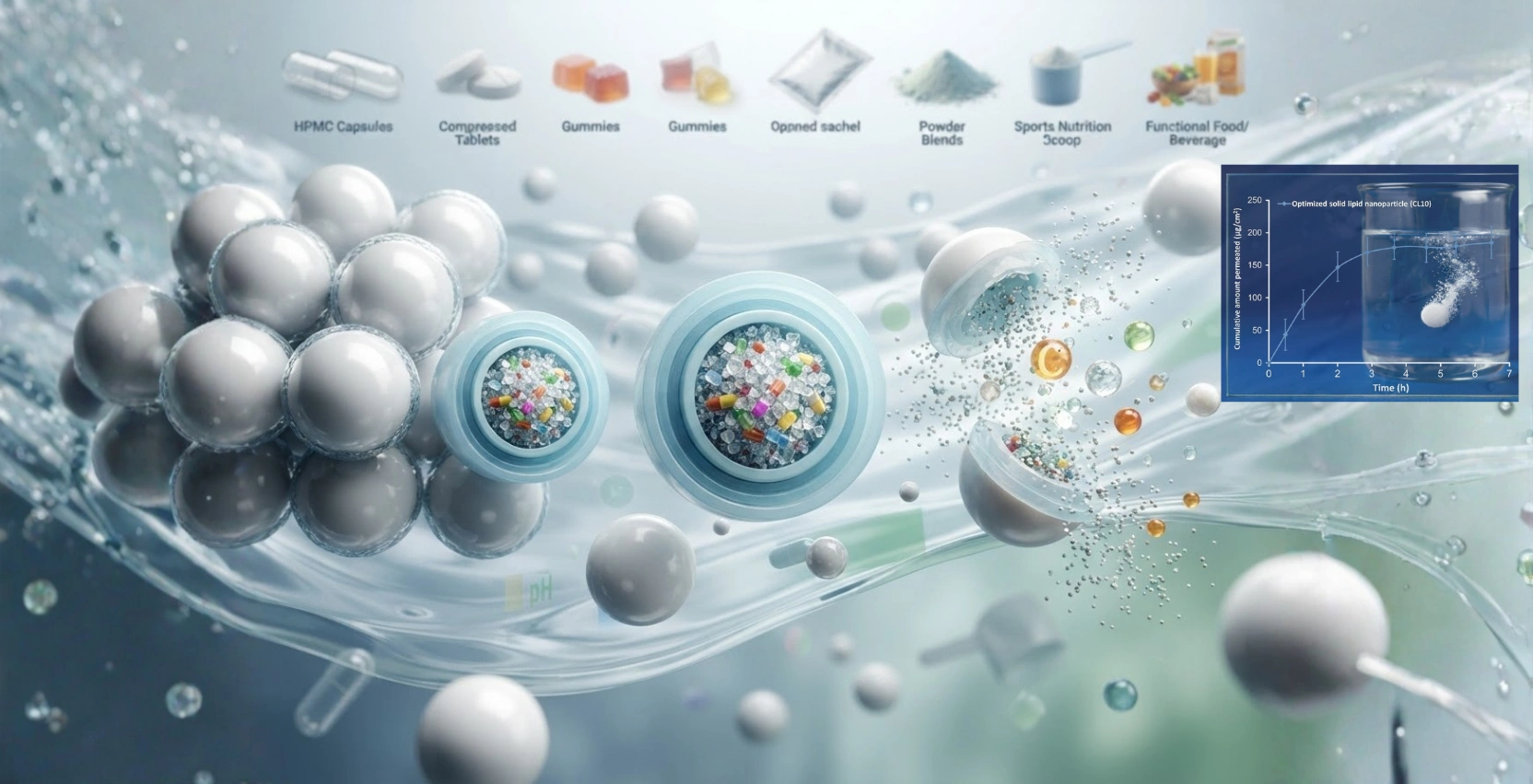
Aishwarya
29 August 2026
Discover how lipid-coated beadlets improve nutraceutical formulations by protecting sensitive ingredients, enhancing handling, masking taste, and controlling release.
Read More →
Aishwarya
21 August 2026
Discover how delayed-release beadlets help control nutrient release, protect sensitive ingredients, improve stability, and enable flexible nutraceutical formulations.
Read More →

INDIA - CORPORATE OFFICE
Unit No. 1, 2nd Floor, Vicino (Mega Mall), New Link Rd, Oshiwara, Andheri West, Mumbai, Maharashtra, India. 400102
MANUFACTURING FACILITY
Unit No. 1, Survey No. 52/2, NH8, Shirsad, Vajreshwari Road, Opp. Mandvi Police Station, Village - Mandvi, Taluka- Vasai, District- Palghar 401 303, India.