Discover how delayed-release beadlets help control nutrient release, protect sensitive ingredients, improve stability, and enable flexible nutraceutical formulations.
Written By
Aishwarya
Published on
21 August 2026
Tags
Delayed release is a type of delivery format in which the active ingredient is intentionally prevented from being released immediately after consumption. Instead, the formulation is designed to create a delay phase, after which the component is released once a set amount of time has passed.
Delayed release is appropriate when the formulation ingredient should not be released immediately after consumption. By delaying release, formulators can develop a product to meet the ingredient's specific needs.
Protecting Sensitive Ingredients
Delayed release may help prevent the active components from being exposed to adverse conditions inside the body before they reach the target site.
Controlling when the ingredients become available
Rather than releasing immediately, the active substance can be delayed for release at a certain time or when an environmental trigger is met.
Supporting specific formulation objectives
Delaying release helps manage interactions between ingredients, protect specific active ingredients, or coordinate the availability of different ingredients within a formulation.
Developing differentiated nutraceutical products
Release-time control gives brands a chance to create new delivery systems beyond standard immediate-release supplements.
In essence, delayed release offers more control over when ingredients become available to the body; therefore, delivery-vehicle design considers the ingredients' attributes and how the end product should perform.
Delayed-release products are manufactured with a protective coating that prevents immediate release of the active ingredient once consumed. The protective coating remains intact for a set period, creating a lag time before the active ingredient becomes available for absorption.
Protective coatings are key to delaying the process. Depending on the formula, manufacturers can use polymers or other coatings to meet the barrier requirements. The coating type, thickness, permeability, and particle characteristics affect how long the coating lasts before release starts.
Environmental factors could also cause release. This includes changes in pH, humidity, temperature, or the gastrointestinal environment, which can cause the coating to dissolve, swell, become permeable, or otherwise enable ingredient release.
Here, delayed-release technology controls the timing of release, rather than merely providing immediate availability of the ingredient after consumption.
Nutraceutical ingredients in their raw form can be affected by process conditions or react with other components in the formulation. Delayed-release beadlets can help overcome these issues because they are coated with an effective barrier layer.
Protection during processing and storage
The encapsulating material may help protect components from external influences, including humidity, oxygen, light, and processing conditions, preventing early degradation
Improved ingredient stability
Encapsulation can minimize the active's direct exposure to external influences, such as heat, humidity, and light, helping maintain its integrity and efficacy throughout processing and storage.
Reduced interaction with other ingredients
The delayed-release coating may form a physical barrier between the drug and other formulation ingredients, reducing possible undesired reactions.
Better handling and flowability
Transforming difficult-to-handle raw materials into beadlets may improve handling, flowability, and processability.
Controlled timing of ingredient release
The release-controlling layer may be engineered to delay release until conditions make it appropriate.
Greater formulation flexibility
Delayed-release beadlets offer formulators greater flexibility to develop formulations with multiple ingredients and varied dosage forms.
In summary, delayed-release beadlets can convert an otherwise difficult raw material into an ingredient that is stable, controllable, and designed for a particular purpose.
Delayed-release nutraceuticals can be used in different dosage forms when controlled release of ingredients is required. The applicability of delayed-release beadlets depends on such factors as the specific ingredient, the coating technology, and the final dosage form needs.
Capsules
Beads designed to provide delayed release may be loaded into capsules to support the delivery system and delay the release of selected compounds. This approach is especially useful when the formula includes several ingredients.
Tablets
Encapsulated components can be formulated into tablets, including multiparticulates, where the beadlet’s coating must withstand processing while still achieving the desired release profile upon ingestion.
Gummies
Certain delayed-release components may be considered for gummy formulations to achieve a formulation that offers both consumer appeal and delayed component release. The encapsulation technology should suit the thermal and humid conditions common in gummy manufacturing.
Sachets
The delayed-release beadlets may be included in individual dosage-form sachets as powders. The beadlets offer controlled release, along with improved mixing and handling properties.
Powder Blend
Delayed-release beadlets help separate selected actives from the formulation, delivering a unique release profile compared with other ingredients.
Functional Foods
The delayed-release component may be used in functional foods where component stability, sensory properties, and the release mechanism are key considerations. Possible examples would be nutrition bars and fortified foods.
Sports Nutrition Products
Delay-release technology can be applied in certain sports nutrition products where controlled nutrient release is desirable. Possible applications include performance blends, recovery aids, nutritional powder, and multi-active formulations.
At Umang Nutraceuticals, we design release mechanisms based on the active ingredient, the release mode, and the needs of the nutraceutical end product. You also don't need to use the same encapsulation process for every ingredient; you can adjust formulation parameters as needed.
Customized Beadlets
You can formulate nutraceuticals into beadlets so their physical and functional properties match their applications. This can solve issues such as handling, stability, taste, and delivery.
Particle-Size Control
Particle size can be tailored to the specific application. Consistent particle size improves flow properties and other characteristics. The particle sizes for customized beadlets range from < 0.2 mm to 5.0mm.
Active Loading
The quantity of active incorporated into each beadlet can be optimized based on the required potency and dose. This will help ensure the right balance between active level, particle quality, and processability.
Coating Customization
The coating process can be fine-tuned to the specific component and the required release profile. Variables that can affect the final beadlet's protection and release features include coating composition, formulation, and thickness.
Release-Profile Development
A release profile that is immediate, sustained, delayed, or otherwise custom-designed can be tailored to the needs of the active and final product. The release profile could be optimized through formulation and dissolution studies.
Application-Specific Approach
Beadlet formulation is based not only on the active ingredient but also on how it will be applied. These include capsule or tablet manufacturing, powder mixing, gummy production, beverage formulation, moisture sensitivity, and storage issues.
Ingredient-Specific Approach
Various nutraceuticals present various problems. Parameters such as solubility, moisture sensitivity, susceptibility to oxidation, taste, smell, stability, and compatibility with other active ingredients may affect the selection of encapsulation and delivery systems.
Not all nutraceuticals require the rapid availability of their ingredients to be effective. In some cases, controlling ingredient availability may be just as crucial to achieving the desired performance. Delayed-release technology gives formulators more control over ingredient delivery.
Delayed-release beadlets designed with encapsulation technology make it possible to develop difficult-to-formulate nutraceutical ingredients more effectively. With proper selection of coating method, particle size, active loading, and release profile, you can create unique formulations across capsules, tablets, powders, gummies, functional foods, and sports nutrition.
At Umang Nutraceuticals, we use encapsulation and beadlet technology to manufacture nutraceutical ingredients with customized properties such as size, loading, color (to Pantone shade), and release profile. Our list of encapsulated nutraceutical ingredients covers vitamins, minerals, botanicals, carotenoids, amino acids, and many more functional ingredients.
Ultimately, delayed release is about timing and delivering it in a way that meets the requirements of both the active ingredient and the final formulation. As nutraceutical formulations advance, customized release mechanisms may offer more flexibility to develop unique products.
Aishwarya
29 August 2026
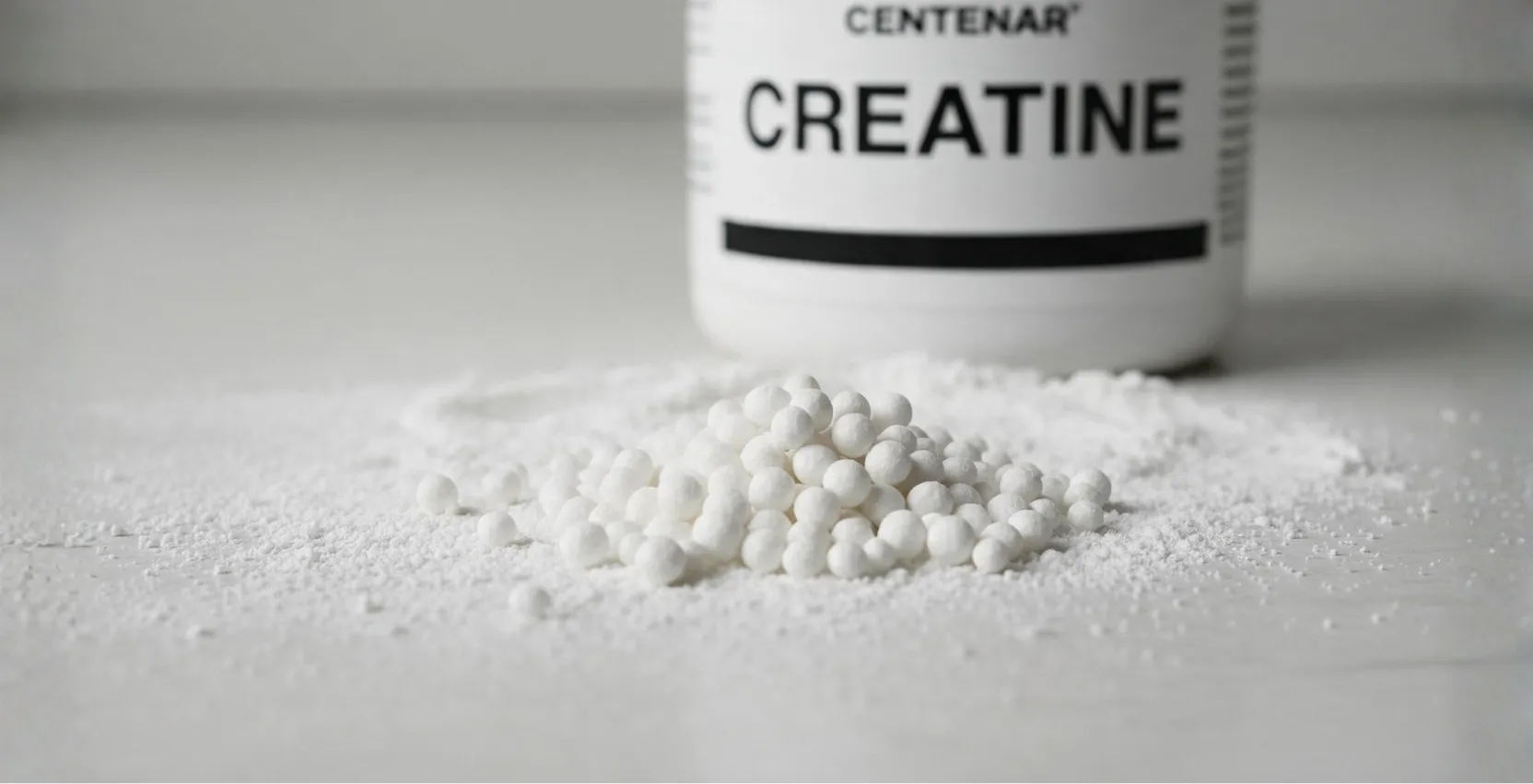
Discover how encapsulated creatine can improve stability, taste, compatibility, and processing while enabling gummies, RTD beverages, capsules, bars, and other formats.
Read More →

Aishwarya
06 August 2026
Discover how encapsulated beadlets improve gummy formulations by enhancing ingredient stability, masking taste, extending shelf life, and protecting sensitive actives.
Read More →
Aishwarya
09 August 2026
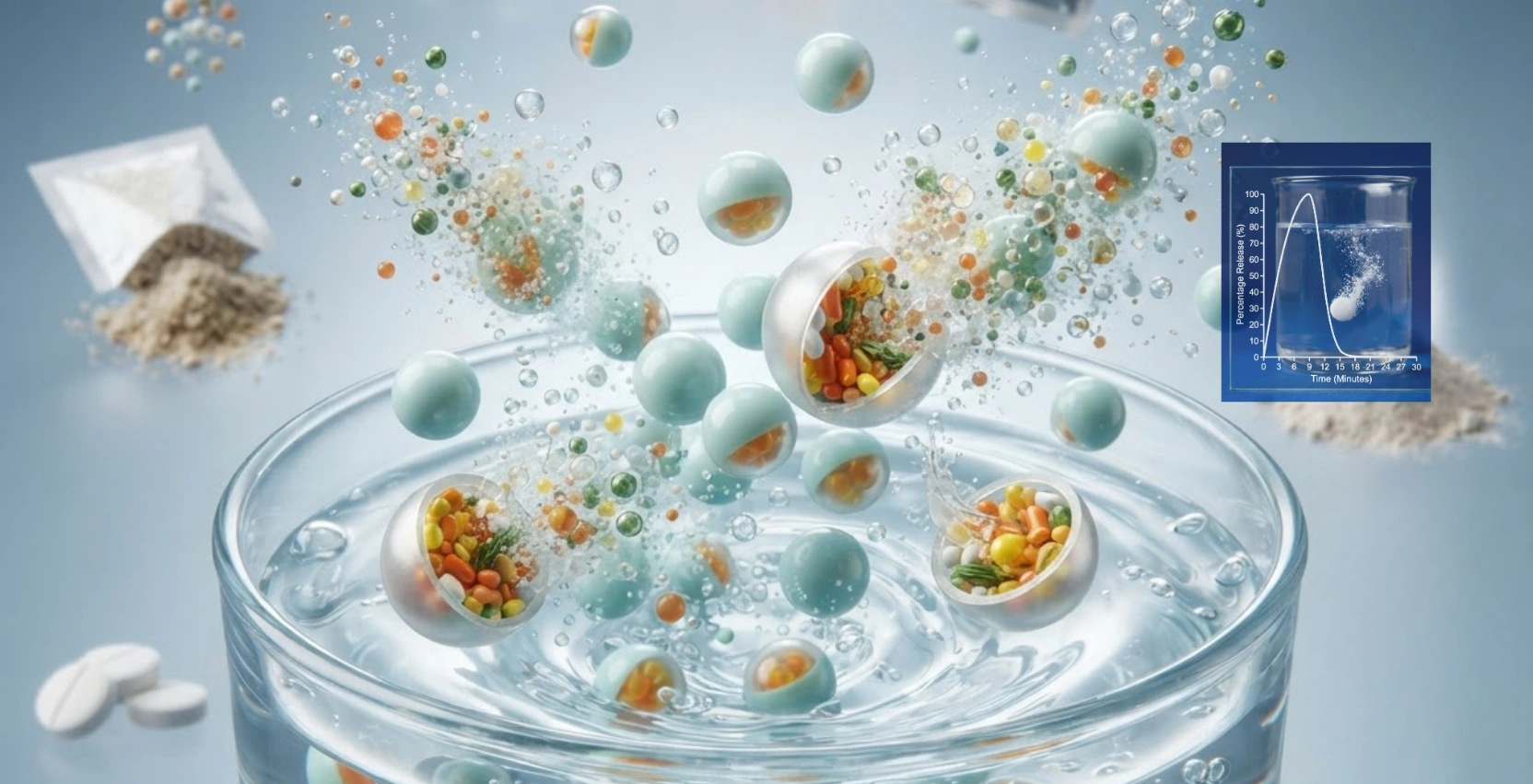
Discover how immediate-release beadlets improve nutraceutical formulations with rapid ingredient availability, better handling, taste masking, stability, and flexibility.
Read More →
Aishwarya
25 August 2026
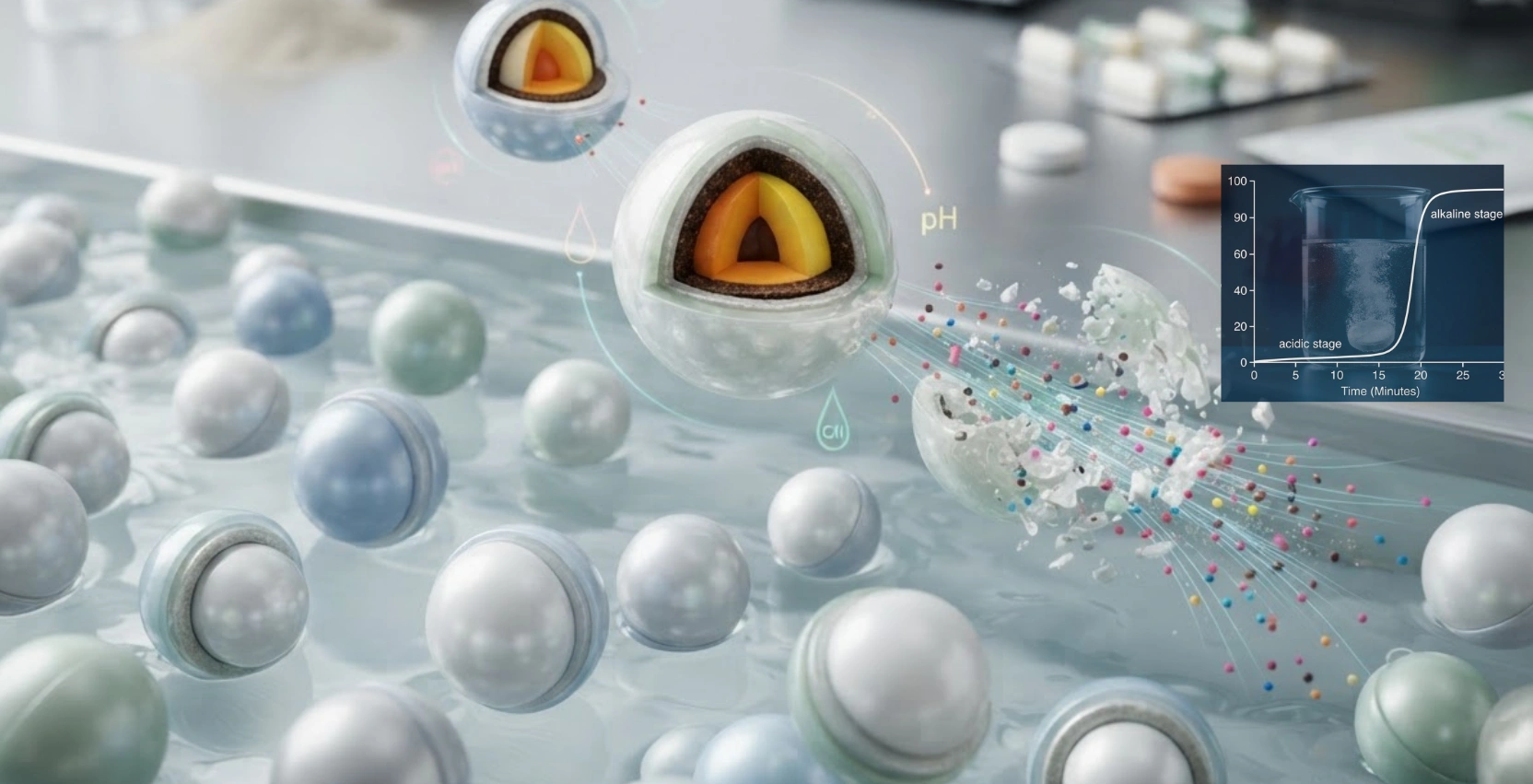
Discover how enteric-coated beadlets protect sensitive nutraceuticals from stomach acid and enable controlled release in the intestinal environment.
Read More →

Aishwarya
03 September 2026
Discover how encapsulation transforms challenging nutraceutical ingredients into stable, formulation-ready ingredients for innovative supplement products.
Read More →
Aishwarya
06 August 2026
Discover how encapsulated beadlets improve gummy formulations by enhancing ingredient stability, masking taste, extending shelf life, and protecting sensitive actives.
Read More →

INDIA - CORPORATE OFFICE
Unit No. 1, 2nd Floor, Vicino (Mega Mall), New Link Rd, Oshiwara, Andheri West, Mumbai, Maharashtra, India. 400102
MANUFACTURING FACILITY
Unit No. 1, Survey No. 52/2, NH8, Shirsad, Vajreshwari Road, Opp. Mandvi Police Station, Village - Mandvi, Taluka- Vasai, District- Palghar 401 303, India.