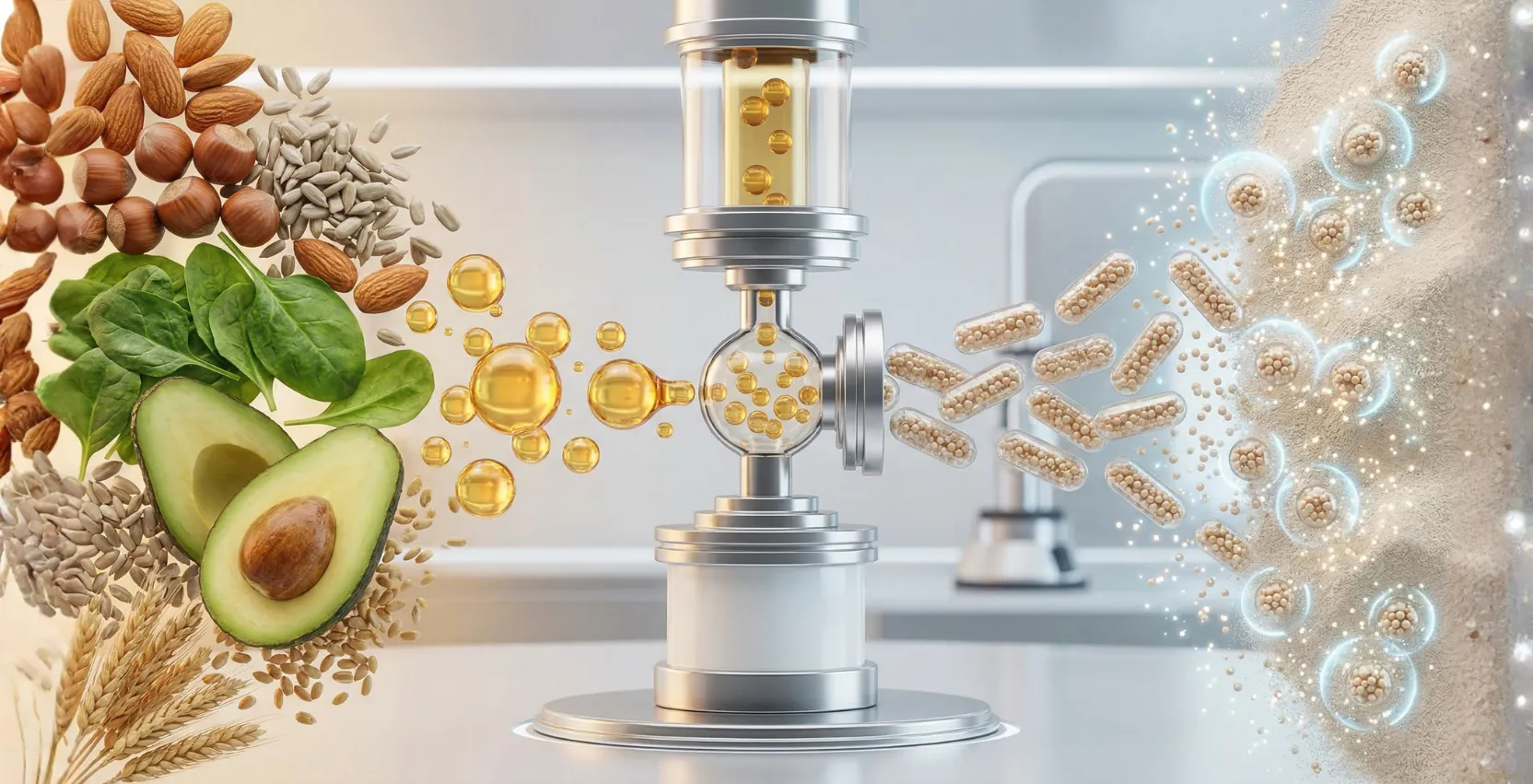
Why microgram B12 doses need encapsulation: content uniformity, pink speckling, spray drying vs fluid-bed vs lipid coating, and how to vet a grade.
Written By
Komal
Published on
07 October 2026
Tags
UMANG GLOBAL GROUP | Technical Paper
Vitamin B12 (cobalamin) is utilized in minute quantities in food and dietary products, where consistency, stability and accurate analysis are crucial. B12 test results may be affected by exposure to bright light, heat, moisture, pH conditions and interactions with ascorbic acid, other B vitamins and minerals. This report reviews the issues regarding B12 as a material and the formulation challenges involved in encapsulating B12, and provides general tips and guidelines regarding the handling and verification of B12 sources.
The B12 formulation must ensure that the stated dosage is achieved in all the tablets, that it is maintained for the entire duration of its shelf life and that it can be verified through various methods. This is important because B12 at a dosage of 2.5 mcg in a 1,000 mg tablet translates into 2.5 ppm. A small loss or unevenness in particle distribution matters because the resulting change in the dosage amount would be significant. Encapsulation protects the active substance inside the capsule, minimizes its exposure to external factors and optimizes handling and release. Evidence to support the formulation should be collected from general scientific facts, relevant published research and authoritative information about the product in question.
4.1 Structure and commercial forms
Cobalamin refers to a group of compounds that have a cobalt atom at their center. The upper ligand attached to the cobalt ion determines the type of cobalamin. Cobalamin can take the forms of cyanocobalamin, hydroxocobalamin, methylcobalamin and 5′-deoxyadenosylcobalamin. Cyanocobalamin is often the preferred option because of its stability properties.
|
Form |
Upper ligand |
Key consideration |
|
CNCbl |
–CN |
Common commercial form; comparatively stable in published comparisons. |
|
OHCbl |
–OH / –H2O |
Stability depends on stress conditions; photolysis remains relevant. |
|
MeCbl |
–CH3 |
Co–C bond; sensitive to light and certain acidic/reactive conditions. |
|
AdoCbl |
5′-deoxyadenosyl |
Co–C bond; light-sensitive; application and regulatory context matter. |
4.2 Regulatory framing
Different jurisdictions and product categories allow various forms of vitamins and impose different preconditions. Applicable law includes EU food supplement and fortified food regulations, US GRAS regulations and dietary supplement cGMP, Codex recommendations and India’s FSSAI regulations. Verify the current requirements for your intended product or market.
5.1 Microgram dosing and content uniformity
To estimate the random distribution of active particles, we can calculate the sampling coefficient of variation using the formula:
CV (%) = 100 / √N | N = D / (w × mp)
where N is the mean number of B12-bearing particles in a dose, D is the B12 dose, w is the B12 content of a given particle, and mp is the particle mass. A random sampling variability of 5% is achieved with about 400 particles, and 2,500 particles are required for 2% random sampling variability.
5.2 Red color speckling
In pale-colored products, concentrated cyanocobalamin particles may appear as red or pink specks. It is possible for a few large, intensely colored particles to create noticeable speckling. The small size of the active particles, the presence of a shell layer or the colored nature of products may lower the visibility of the specks, yet speckling may also be an indication of low particle number or poor distribution.
5.3 Light
Cobalamins can degrade under light irradiation. Different forms of cobalamin may have different sensitivities, and different types of reactive species may also affect them. Proper protection procedures should be applied during processing, storage and analytical investigation.
5.4 Heat, pH and moisture
Temperature and pH stresses can cause losses of B12; the degree of these losses depends on the form of cobalamin and the matrix. Moisture and water activity influence molecular mobility and stability in dry systems; hence, the processing temperature, pH, exposure to moisture and packaging should be controlled and evaluated in product-relevant stability studies.
5.5 Interactions with vitamin C, other B vitamins and minerals
Ascorbic acid is known to have incompatibility issues, and its degradation is sensitive to the formula and pH. Other ingredients, such as vitamins B1, B2 and B3 and trace minerals, could impact the activity of the product. Analyze the formulation as a whole and document the source of the minerals.
5.6 Analysis at parts-per-million levels
Basic B12 evaluation necessitates a validated method that allows for complete extraction and sufficient sensitivity. While microbiological tests assess B12 bioactivity, they do not provide information on the type of cobalamin that is present. However, chromatographic techniques such as ultra-performance liquid chromatography (UPLC-UV) or reversed-phase high-performance liquid chromatography (RP-HPLC) are able to quantify B12 compounds.
Encapsulation can use reservoir-type coatings or a matrix structure in which B12 is enclosed or dispersed within a carrier. When choosing wall materials and processes, criteria such as compatibility, barrier properties, thermal and moisture exposure, desired particle characteristics and intended release should all be considered. While the encapsulation literature offers useful principles, such evaluations should not be construed as evidence of specific product performance.
6.1 Manufacturing approaches
|
Approach |
Process role / potential benefit |
Critical considerations |
|
Spray drying |
Forms matrix particles from a feed dispersion; suited to scalable powder production. |
Inlet/outlet conditions, wall composition, moisture and particle recovery. |
|
Spray chilling / cooling |
Solidifies a molten carrier around or with the active; can avoid aqueous drying. |
Melt temperature, cooling rate and carrier compatibility with B12. |
|
Fluid-bed coating |
Deposits a coating onto cores or particles to create a barrier layer. |
Coating uniformity, process conditions, attrition and particle integrity. |
|
Hot-melt / lipid coating |
Applies a lipid-based protective layer without solvent-based coating. |
Thermal exposure, coating thickness, adhesion and release profile. |
|
Matrix / other encapsulation |
Distributes the active through a carrier and can tailor handling or release. |
Loading, particle size, process reproducibility and validated performance. |
Process selection should be grade- and application-specific. Confirm the active form, wall materials, particle size distribution, loading, process tolerance and desired release profile before scale-up.
6.2 VitaSphere™B12 technology platform
The technology codes TM, GR, SR, IR, LC, DE, MB, ME and MP have been identified, with a platform active-content range of 0.1–10%. The definitions of DE, MB, ME and MP have not been confirmed in this document and must be validated with Umang. Product-specific performance claims are subject to data validation.
|
Format |
Key formulation considerations |
|
Tablets / capsules |
Blend uniformity, flow, compression or filling performance, particle integrity and content uniformity. |
|
Vitamin / mineral premixes |
Compatibility with ascorbic acid, other B vitamins, minerals and moisture; shelf-life assay. |
|
Beverage powders |
pH, dispersion, moisture exposure and analytical recovery in the final matrix. |
|
Gummies / acidic formats |
Acid and process-temperature exposure; stability and release in the actual formulation. |
|
Quality attribute |
Evaluation / purpose |
|
Particle size and loading |
Characterize active-bearing particles and assess dose-level particle count. |
|
Blend and content uniformity |
Verify distribution in the blend and individual dosage units using applicable compendial criteria. |
|
Assay and extraction recovery |
Validate extraction from encapsulated particles and quantify B12 at the intended level. |
|
Stability / photostability |
Assess assay retention under relevant light, temperature, pH, moisture and premix conditions. |
|
Dissolution / release |
Measure release using suitable methods; compare profiles where appropriate. |
|
Particle / coating integrity |
Examine physical integrity and compare release or coating condition before and after processing. |
|
Documentation |
Review grade-specific specifications, analytical methods, batch data and supporting validation. |
VitaSphere™B12 is an encapsulated B12 ingredient platform suitable for formulations where low-dose uniformity, stability and processing efficiency are the main target parameters. A sound selection strategy should match particle size and active loading to the anticipated dosage and include compatibility analysis with the overall formulation, as well as assay retention, extraction recovery, release properties and particle integrity during processing and storage of the product. Ultimately, the assessment should be based on grade-specific information and product testing; literature cases can be helpful but should not serve as a substitute for the results of direct testing.
Komal
07 October 2026
Why microgram B12 doses need encapsulation: content uniformity, pink speckling, spray drying vs fluid-bed vs lipid coating, and how to vet a grade.
Read More →
Komal
18 November 2026
How cobalamin degrades under light, pH, heat and vitamin C, how to predict B12 shelf life, design ICH stability studies and calculate overage.
Read More →
Komal
14 November 2026
Wet, fluid-bed, melt or roller granulation vs direct compression for low-dose B12 tablets: flow tests, tabletability, uniformity, coating integrity.
Read More →
Komal
18 November 2026
How cobalamin degrades under light, pH, heat and vitamin C, how to predict B12 shelf life, design ICH stability studies and calculate overage.
Read More →
Komal
07 October 2026
Why microgram B12 doses need encapsulation: content uniformity, pink speckling, spray drying vs fluid-bed vs lipid coating, and how to vet a grade.
Read More →
Komal
09 October 2026
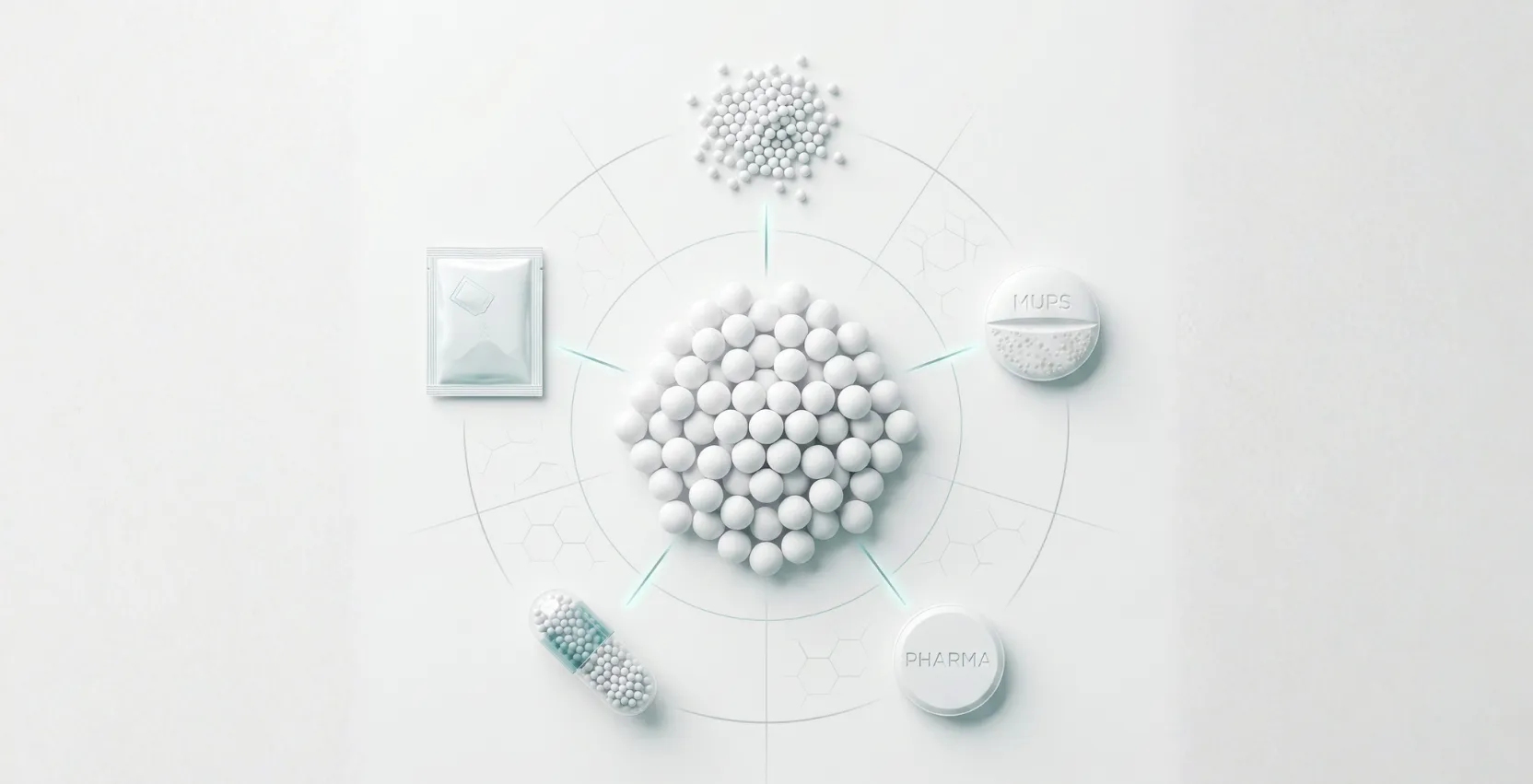
Where B12 is lost in tablets, capsules, gummies, lozenges, drink powders, fortified foods and premixes, and which VitaSphere™ B12 grade to trial.
Read More →

INDIA - CORPORATE OFFICE
Unit No. 1, 2nd Floor, Vicino (Mega Mall), New Link Rd, Oshiwara, Andheri West, Mumbai, Maharashtra, India. 400102
MANUFACTURING FACILITY
Unit No. 1, Survey No. 52/2, NH8, Shirsad, Vajreshwari Road, Opp. Mandvi Police Station, Village - Mandvi, Taluka- Vasai, District- Palghar 401 303, India.